






























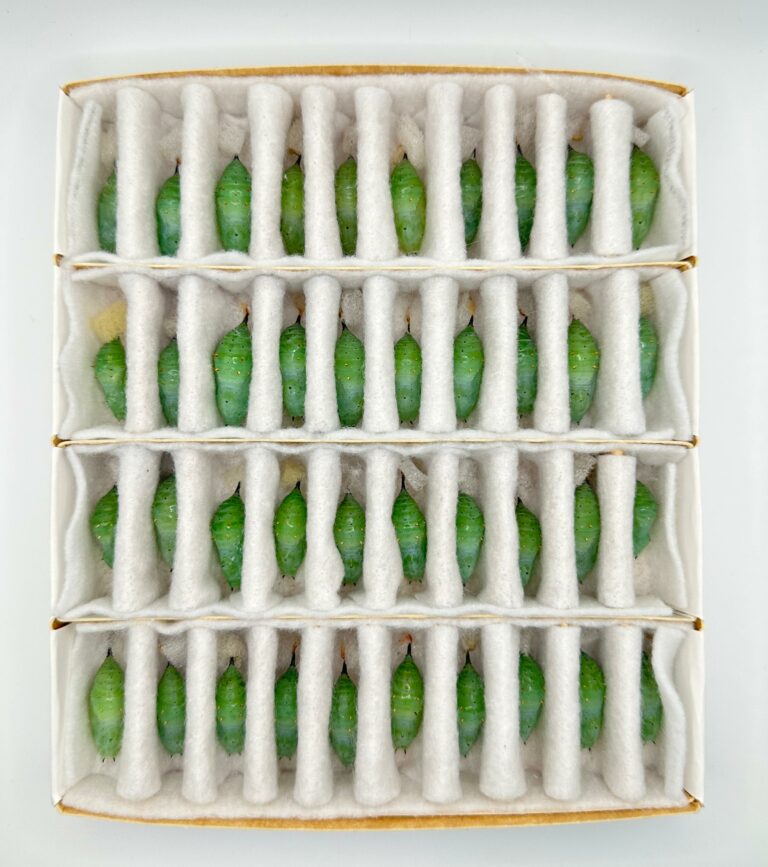
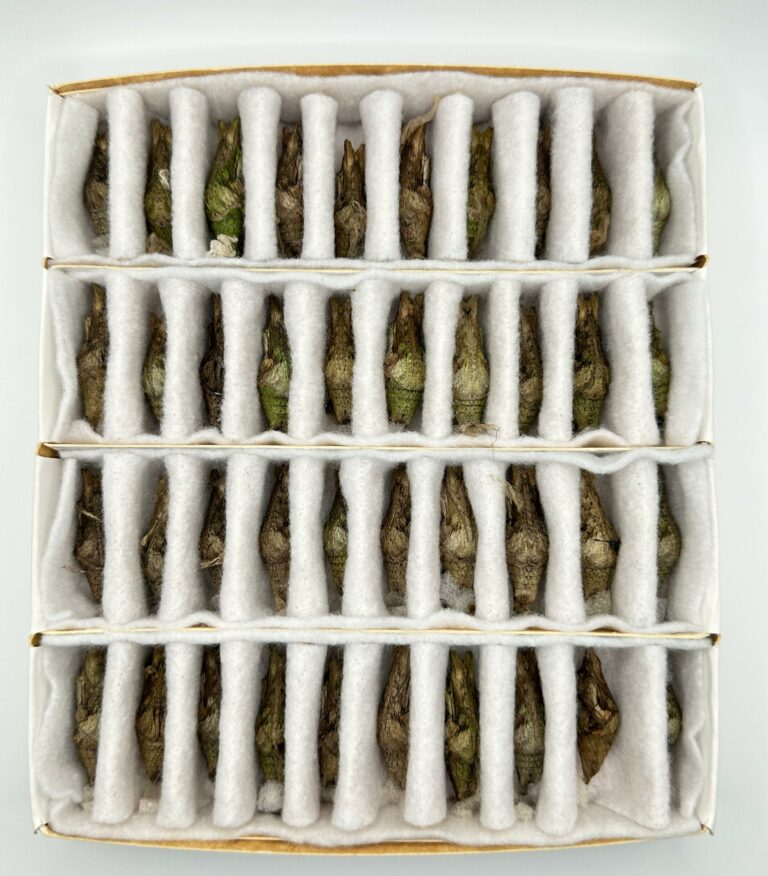
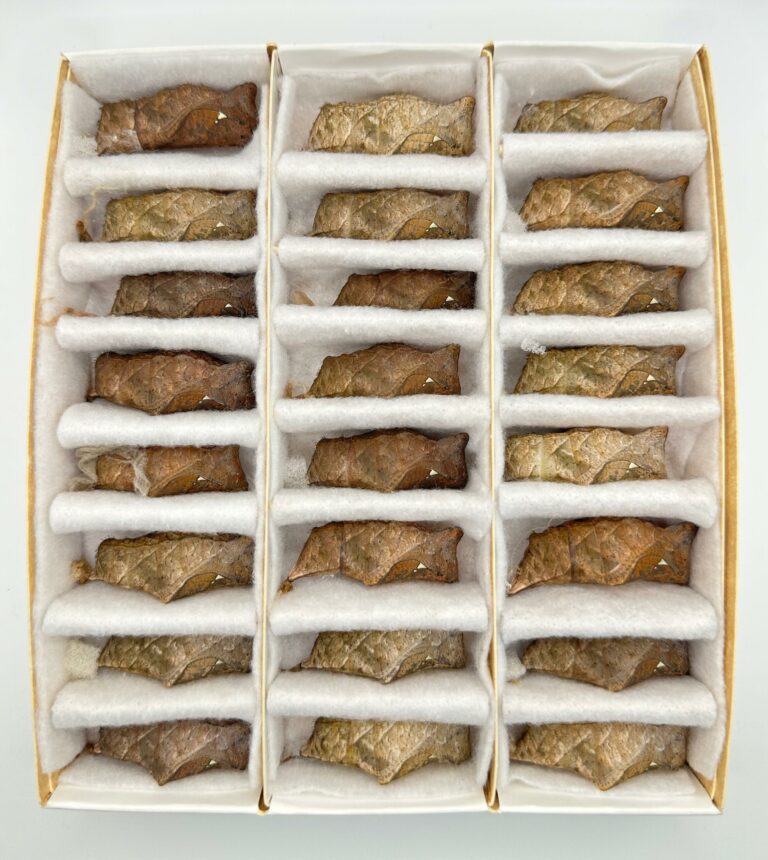
I have come from a little country in Central America, Costa Rica. Costa Rica is a world leader in the supply of butterfly pupae, and I would maintain that this is not an accident. Perhaps it may be worth a few minutes to explore why this is so and inquiring if there are lessons that can be learned.
Let’s start at the beginning. The land mass that now is Costa Rica first emerged from the seas 50 million years ago. That’s a lot of years, but in geological terms that’s like yesterday. The dinosaurs had already vanished from the planet 15 million years previously.
What you will find are a lot of volcanoes and water. These are, you could say are what make Costa Rica what it is: a composite of fire and water.
One sees this in the country’s seal where three volcanic ranges and the Pacific and Atlantic oceans are featured prominently.
Everything comes from molds. Butterflies symbolize this perfectly as they are formed in the chrysalis. Costa Rica was formed, physically, and from that mold of a land bridge between North and South America and all that rich volcanic soil and variety of microclimates, came Costa Rica’s wealth of biodiversity.
Molds don’t have to be just physical. As humans we are molded by our land. We are molded by our cultures. For example, a skilled anthropologist can determine the cultural or regional origin of a 2 year old simply by the child’s gestures.
Of course we are molded by chance and time as well.
Costa Rica was “discovered” by the Europeans by Christopher Columbus in 1451 during his third voyage to the New World. It was he that gave the land its moniker, Costa Rica, or “Rich Coast” in the false belief that the land abounded with gold and other mineral resources that were much sought by the Europeans. In fact, there were no gold, silver or indigenous people to enslave. That’s to say that all the available mineral resources were traded or plundered from the region in a few short years. The local peoples, rather than succumbing to the Europeans, fought back. To the colonists’ sorrow the “Rich Coast” had little of what they thought should be treasured.
Most of them left to other lands such as Mexico and Guatemala. The few that remained settled in an impoverished backwater. This led, then, to the European inhabitants having to discover their own true gold… within. And what did they find there? While few would have admitted it at the time in the midst of their considerable suffering, they discovered that cash does not equal wealth. Cash is merely the illusion of wealth. Where there was a lot of money, opulence and power, there were also a lot of guns, human misery and unending greed. The societies that evolved in other nearby countries such as El Salvador, Guatemala and Mexico have spent centuries in unrest and violence as a result of their relative financial wealth and power.
The Costa Ricans founded a culture of PEACE. In Costa Rica one could almost count all the months of social turmoil in the past 5 centuries on two hands. There was the Battle of Ochomongo between the towns of Cartago and San Jose to determine who would host the country’s capital. That lasted 20 minutes. There was a war against an American adventurer, William Walker, in 1856.
From that campaign we acquired the country’s only martyr and national hero, Juan Santamaria. That campaign took a month or two. Then there was the civil war of 1948 which lasted 40 days. Since then, for the past 60 years, the country has not had a military. This is a position that is unique in the region and unique in the world. The United Nations University for Peace is based in Costa Rica, within sight of The Butterfly Farm, in fact. Our current president, Oscar Arias Sanchez, is a Nobel Peace Prize laureate.
Costa Rica, because it was a backwater and was terribly poor, enjoyed a relatively egalitarian society. While it certainly had its financial and political elites, as there are everywhere, the working farmer was always the mainstay of society. This sense of equality allowed for the country’s democracy to grow. The Costa Rican flag, features red, white and blue.
The lower and upper blue bands represent the sea and the sky. The two white bands represent peace. The central red band represents what we could call the fire of life, specifically the blood of its people but we might also include the magma of its volcanoes. So 1/3 of the flag’s real estate is devoted to peace while the remaining 2/3 celebrates life.
Costa Rica is a world leader in conservation. A third of the country is protected in national parks, forest reserves and the like.
To conserve, one must approach the world from a place of HUMILITY.
and this is why the word “conserve” comes from “con” (with) and “serve” (service). If as a society you don’t have it in you to humble yourself to Nature, you cannot possible conserve or exercise conservation in any seriously meaningful way. Costa Rica is not, in the financial sense, a wealthy country. It is, after all, what is referred to as a Third World country.
The country’s “wealth” can only be found in the wealth of its collective heart.
Of course, Costa Rica is beautiful.
Aesthetically, it can be breathtaking. The country’s natural beauty, together with the inner beauty of its people,
is why tourism represents the country’s leading source of foreign revenue.
Yet this is a butterfly conference and butterflies have little to do with land formations or human society. However, as human beings, butterfly farmers, we must not forget that we are molded and influenced by the land and society in which we live.
Butterfly farming, at least through the model that has been developed over the past 20 years in Costa Rica, is similarly rich. Its roots were inspired by the book and economic treatise, Small is Beautiful by E.F. Schumacher.
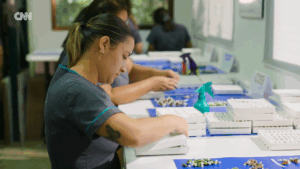
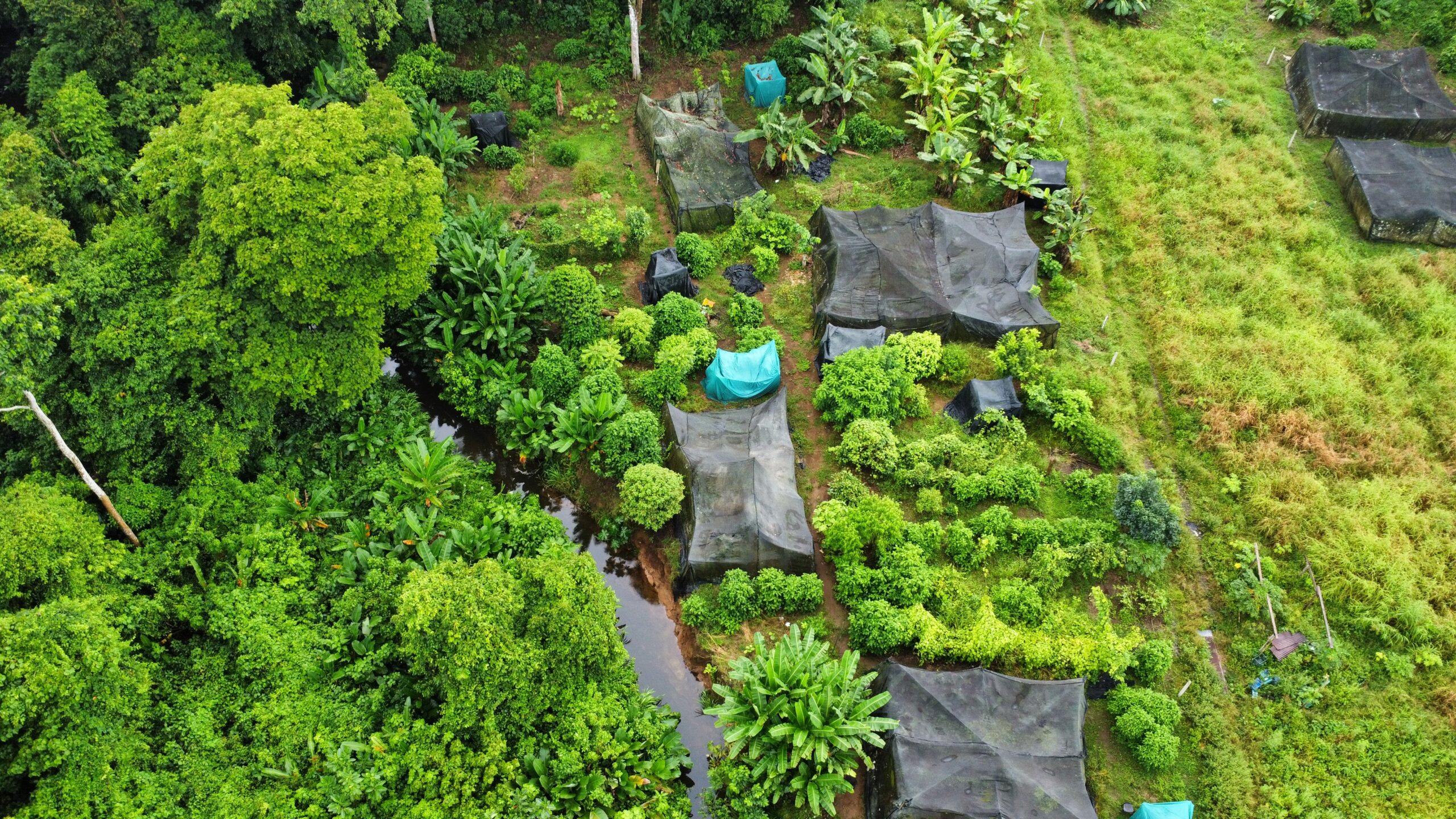
Butterfly farming is necessarily egalitarian. Because of the limitations imposed by the forces of Nature, innumerable predators and diseases, it requires that many small-scale farmers produce relatively few butterflies. One cannot invest a lot of capital and labor and produce a butterfly factory. Nature, with all her tools, will prevent a large concentration of food and nutrients from gathering in a single place. At CRES, by choice and necessity, we rear less than 2% of the pupae that we export. From a social perspective, we believe that it is socially more desirable that the money goes out to the people in the countryside.
It is worth noting that the Harvard Business School, through many collaborative programs in Latin America, has spent 9 years investigating “Socially Inclusive Enterprises,” businesses that reach out to the poor and most disenfranchised segments of society. 66 case studies have been written. CRES, along with a low-cost insurance program founded in the slums of Caracas, Venezuela, were the two cases selected for intense review by business school deans and professors at Harvard this past August.
Equality is a precondition for freedom. There cannot be personal freedom in a lopsided society of haves and have-nots. The wealthy live behind walls and armed guards while the poor live in misery and despair. Butterfly farmers in Costa Rica are free to enter and leave the activity at will. They manage their farms as their own private businesses, selling pupae to whom they wish. One of the many features that encourage people to become butterfly farmers is the country’s great biodiversity, formed as we said, from the mold of Costa Rica’s geology.
A client in the United States once wrote how impressed he was with the supply of pupae from Costa Rica. Not only was the quality first rate, he wrote, but that he’d been astonished to realize that he’d received more species from Costa Rica that year than from the rest of his worldwide network of suppliers combined.
Butterfly farmers must “Con-Serve” too. They invest extraordinarily long hours, 365 days a year. They work with passion. They must surrender themselves to what they do. They must be HUMBLE, always willing to learn and experiment. One cannot doubt the humbleness of the butterfly farmers of Costa Rica when one observes the massive improvement in quality that has occurred in the last decade.
The government is humble. You may laugh. Three of our previous four presidents have faced corruption charges. But as one that has been exporting butterflies from Costa Rica for 25 years now, I can say this. The government has been extraordinarily cooperative and supportive of butterfly farming. Without this support, which is felt in countless ways, the activity could never have gotten off the ground.
The butterfly farmers are risk takers. Every one of them has had the vision and strength to break from the traditional forms of live or livelihood. Everyone has assumed a huge risk, knowing that at any moment their livelihood could be wiped out. Perhaps a virus will strike, a hurricane will arrive or a foreign government will suddenly prohibit the importation of butterflies. You don’t become a butterfly farmer to achieve job security or become rich.
One can only approach it, and be successful at it, from love. As a friend once comment, “Un criador de mariposas no se hace: se nace.” Butterfly farmers cannot be made but rather they must be born. Without that love, complete passion for what one does, nothing will ensue.
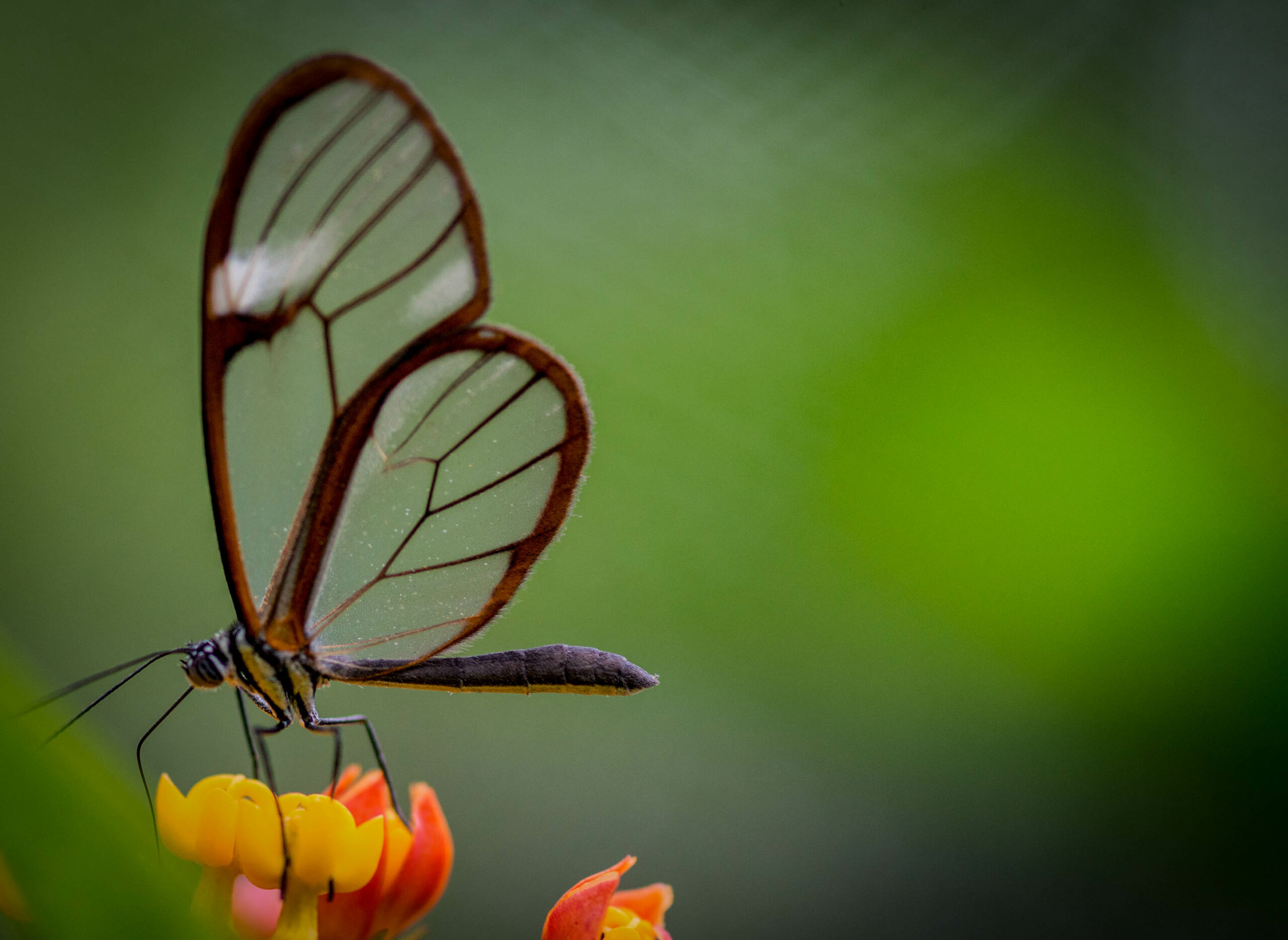
Finally, we get to the focus of what we’re here for, the butterfly. In the popular imagination at least, the butterfly is singularly the most appealing life forms there is. Of all the possible wildlife exhibits possible, only butterfly exhibits have proliferated.
You won’t find many elephant or free-standing bird or ant exhibits around, will you? We, all of us, everyone in this room, owe our livelihood to the appeal of the butterfly. This is undeniable.
So we look at the butterfly and the words that come to people’s minds when they think of it. Not just our minds, here in this room, but all people, at all times, in all cultures and in all regions of the planet. What does the butterfly embody?
Peace comes first to mind. Butterflies may create countless clever defense mechanisms, but you won’t find many defending their territory or coveting resources in a distant land.
Butterflies fit into their eco-system perfectly.
With a 98% mortality rate through their lifecycle, butterflies must work astoundingly hard to survive to adulthood.
We say that butterflies are free. We don’t say this because they can fly from point A to point B. By this measure we are more free in our automobiles. Butterflies are free because they live free from fear. Although they exist at the bottom of the food chain and anything can consume or attack that at any moment in their lives, butterflies do not cower under the leaves. They are out there in Nature, in broad daylight, going about their business without regard to what may attack at any moment.
Butterflies, clearly, bring much beauty and mystery to the world.
In pre-Columbian mythology the butterfly represented the embodiment of fire and water… exactly what Costa Rica itself is.
And others that I have not mentioned:
Change, metamorphosis, which mythologically could be referred to as: death and rebirth.
So here we are, October 2008. As we sit here collapse is occurring. The ecology is collapsing. Outside that window we see a sea without fish. Yesterday we learned of the total evaporation of the Bornholm fishing industry, a staple to the local economy for centuries. I will be attending a seminar next week in northern Scotland. The residents there can plot on a graph the decades ahead as it submerges under the sea. The list of examples is, literally, endless. The global financial system – the exact antithesis of the model of Costa Rican butterfly farming – is collapsing as we speak. It must as it’s not sustainable. Socially, among societies, tensions (and arms) are rising. We live in a world where our hearts are hardening. The world is more complex. We can’t cope so we seek simple sound-bite solutions by clinging to a dogma, any dogma – religious, political or anything else. Give us a perceived threat and a firm leader and we willingly concede our civil rights.
Yet if you ask anyone in our global society today, anywhere, “What would you aspire to for humanity?” I think that everyone would list the attributes that are still – but ever less so – in Costa Rica. These are attributes that can be found in the butterfly farmers of Costa Rica. These ideals, as we have seen, are the universally recognized ideals of “the butterfly.” That Costa Rica is a world leader in the supply of butterflies is no coincidence. They are not the cheapest pupae in the market. Yet as exhibitors, when you purchase butterflies from Costa Rica you are receiving more than just butterfly pupae. You are supporting a vision for the world that is directly contrarian to the direction of seemingly everything else our leaders, the media, our educational system and society would have us believe. As we watch the “interesting times” ahead, let’s remember what true wealth is. Costa Rica, its butterfly farmers and most importantly, the butterflies themselves are continually suggesting this. Solutions to our problems – all of our problems – are not to be found out there through some marvelous acts of legislation. They lie within.
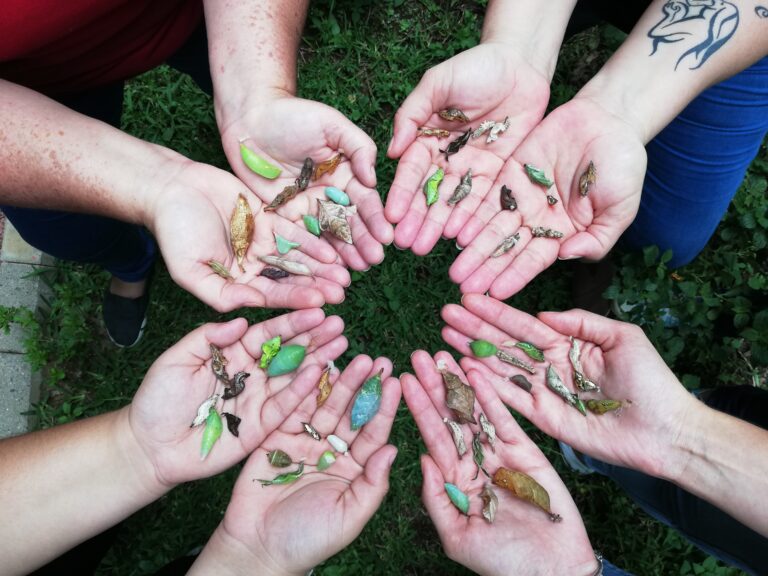
Symbolically, at least, they might be found right there in front of our eyes.
Have we the courage to see?
I have come from a little country in Central America, Costa Rica. Costa Rica is a world leader in the supply of butterfly pupae, and I would maintain that this is not an accident. Perhaps it may be worth a few minutes to explore why this is so and inquiring if there are lessons that can be learned.
Let’s start at the beginning. The land mass that now is Costa Rica first emerged from the seas 50 million years ago. That’s a lot of years, but in geological terms that’s like yesterday. The dinosaurs had already vanished from the planet 15 million years previously.
What you will find are a lot of volcanoes and water. These are, you could say are what make Costa Rica what it is: a composite of fire and water.
One sees this in the country’s seal where three volcanic ranges and the Pacific and Atlantic oceans are featured prominently.
Everything comes from molds. Butterflies symbolize this perfectly as they are formed in the chrysalis. Costa Rica was formed, physically, and from that mold of a land bridge between North and South America and all that rich volcanic soil and variety of microclimates, came Costa Rica’s wealth of biodiversity.
Molds don’t have to be just physical. As humans we are molded by our land. We are molded by our cultures. For example, a skilled anthropologist can determine the cultural or regional origin of a 2 year old simply by the child’s gestures.
Of course we are molded by chance and time as well.
Costa Rica was “discovered” by the Europeans by Christopher Columbus in 1451 during his third voyage to the New World. It was he that gave the land its moniker, Costa Rica, or “Rich Coast” in the false belief that the land abounded with gold and other mineral resources that were much sought by the Europeans. In fact, there were no gold, silver or indigenous people to enslave. That’s to say that all the available mineral resources were traded or plundered from the region in a few short years. The local peoples, rather than succumbing to the Europeans, fought back. To the colonists’ sorrow the “Rich Coast” had little of what they thought should be treasured.
Most of them left to other lands such as Mexico and Guatemala. The few that remained settled in an impoverished backwater. This led, then, to the European inhabitants having to discover their own true gold… within. And what did they find there? While few would have admitted it at the time in the midst of their considerable suffering, they discovered that cash does not equal wealth. Cash is merely the illusion of wealth. Where there was a lot of money, opulence and power, there were also a lot of guns, human misery and unending greed. The societies that evolved in other nearby countries such as El Salvador, Guatemala and Mexico have spent centuries in unrest and violence as a result of their relative financial wealth and power.
The Costa Ricans founded a culture of PEACE. In Costa Rica one could almost count all the months of social turmoil in the past 5 centuries on two hands. There was the Battle of Ochomongo between the towns of Cartago and San Jose to determine who would host the country’s capital. That lasted 20 minutes. There was a war against an American adventurer, William Walker, in 1856.
From that campaign we acquired the country’s only martyr and national hero, Juan Santamaria. That campaign took a month or two. Then there was the civil war of 1948 which lasted 40 days. Since then, for the past 60 years, the country has not had a military. This is a position that is unique in the region and unique in the world. The United Nations University for Peace is based in Costa Rica, within sight of The Butterfly Farm, in fact. Our current president, Oscar Arias Sanchez, is a Nobel Peace Prize laureate.
Costa Rica, because it was a backwater and was terribly poor, enjoyed a relatively egalitarian society. While it certainly had its financial and political elites, as there are everywhere, the working farmer was always the mainstay of society. This sense of equality allowed for the country’s democracy to grow. The Costa Rican flag, features red, white and blue.
The lower and upper blue bands represent the sea and the sky. The two white bands represent peace. The central red band represents what we could call the fire of life, specifically the blood of its people but we might also include the magma of its volcanoes. So 1/3 of the flag’s real estate is devoted to peace while the remaining 2/3 celebrates life.
Costa Rica is a world leader in conservation. A third of the country is protected in national parks, forest reserves and the like.
To conserve, one must approach the world from a place of HUMILITY.
and this is why the word “conserve” comes from “con” (with) and “serve” (service). If as a society you don’t have it in you to humble yourself to Nature, you cannot possible conserve or exercise conservation in any seriously meaningful way. Costa Rica is not, in the financial sense, a wealthy country. It is, after all, what is referred to as a Third World country.
The country’s “wealth” can only be found in the wealth of its collective heart.
Of course, Costa Rica is beautiful.
Aesthetically, it can be breathtaking. The country’s natural beauty, together with the inner beauty of its people,
is why tourism represents the country’s leading source of foreign revenue.
Yet this is a butterfly conference and butterflies have little to do with land formations or human society. However, as human beings, butterfly farmers, we must not forget that we are molded and influenced by the land and society in which we live.
Butterfly farming, at least through the model that has been developed over the past 20 years in Costa Rica, is similarly rich. Its roots were inspired by the book and economic treatise, Small is Beautiful by E.F. Schumacher.
Butterfly farming is necessarily egalitarian. Because of the limitations imposed by the forces of Nature, innumerable predators and diseases, it requires that many small-scale farmers produce relatively few butterflies. One cannot invest a lot of capital and labor and produce a butterfly factory. Nature, with all her tools, will prevent a large concentration of food and nutrients from gathering in a single place. At CRES, by choice and necessity, we rear less than 2% of the pupae that we export. From a social perspective, we believe that it is socially more desirable that the money goes out to the people in the countryside.
It is worth noting that the Harvard Business School, through many collaborative programs in Latin America, has spent 9 years investigating “Socially Inclusive Enterprises,” businesses that reach out to the poor and most disenfranchised segments of society. 66 case studies have been written. CRES, along with a low-cost insurance program founded in the slums of Caracas, Venezuela, were the two cases selected for intense review by business school deans and professors at Harvard this past August.
Equality is a precondition for freedom. There cannot be personal freedom in a lopsided society of haves and have-nots. The wealthy live behind walls and armed guards while the poor live in misery and despair. Butterfly farmers in Costa Rica are free to enter and leave the activity at will. They manage their farms as their own private businesses, selling pupae to whom they wish. One of the many features that encourage people to become butterfly farmers is the country’s great biodiversity, formed as we said, from the mold of Costa Rica’s geology.
A client in the United States once wrote how impressed he was with the supply of pupae from Costa Rica. Not only was the quality first rate, he wrote, but that he’d been astonished to realize that he’d received more species from Costa Rica that year than from the rest of his worldwide network of suppliers combined.
Butterfly farmers must “Con-Serve” too. They invest extraordinarily long hours, 365 days a year. They work with passion. They must surrender themselves to what they do. They must be HUMBLE, always willing to learn and experiment. One cannot doubt the humbleness of the butterfly farmers of Costa Rica when one observes the massive improvement in quality that has occurred in the last decade.
The government is humble. You may laugh. Three of our previous four presidents have faced corruption charges. But as one that has been exporting butterflies from Costa Rica for 25 years now, I can say this. The government has been extraordinarily cooperative and supportive of butterfly farming. Without this support, which is felt in countless ways, the activity could never have gotten off the ground.
The butterfly farmers are risk takers. Every one of them has had the vision and strength to break from the traditional forms of live or livelihood. Everyone has assumed a huge risk, knowing that at any moment their livelihood could be wiped out. Perhaps a virus will strike, a hurricane will arrive or a foreign government will suddenly prohibit the importation of butterflies. You don’t become a butterfly farmer to achieve job security or become rich.
One can only approach it, and be successful at it, from love. As a friend once comment, “Un criador de mariposas no se hace: se nace.” Butterfly farmers cannot be made but rather they must be born. Without that love, complete passion for what one does, nothing will ensue.
Finally, we get to the focus of what we’re here for, the butterfly. In the popular imagination at least, the butterfly is singularly the most appealing life forms there is. Of all the possible wildlife exhibits possible, only butterfly exhibits have proliferated.
You won’t find many elephant or free-standing bird or ant exhibits around, will you? We, all of us, everyone in this room, owe our livelihood to the appeal of the butterfly. This is undeniable.
So we look at the butterfly and the words that come to people’s minds when they think of it. Not just our minds, here in this room, but all people, at all times, in all cultures and in all regions of the planet. What does the butterfly embody?
Peace comes first to mind. Butterflies may create countless clever defense mechanisms, but you won’t find many defending their territory or coveting resources in a distant land.
Butterflies fit into their eco-system perfectly.
With a 98% mortality rate through their lifecycle, butterflies must work astoundingly hard to survive to adulthood.
We say that butterflies are free. We don’t say this because they can fly from point A to point B. By this measure we are more free in our automobiles. Butterflies are free because they live free from fear. Although they exist at the bottom of the food chain and anything can consume or attack that at any moment in their lives, butterflies do not cower under the leaves. They are out there in Nature, in broad daylight, going about their business without regard to what may attack at any moment.
Butterflies, clearly, bring much beauty and mystery to the world.
In pre-Columbian mythology the butterfly represented the embodiment of fire and water… exactly what Costa Rica itself is.
And others that I have not mentioned:
Change, metamorphosis, which mythologically could be referred to as: death and rebirth.
So here we are, October 2008. As we sit here collapse is occurring. The ecology is collapsing. Outside that window we see a sea without fish. Yesterday we learned of the total evaporation of the Bornholm fishing industry, a staple to the local economy for centuries. I will be attending a seminar next week in northern Scotland. The residents there can plot on a graph the decades ahead as it submerges under the sea. The list of examples is, literally, endless. The global financial system – the exact antithesis of the model of Costa Rican butterfly farming – is collapsing as we speak. It must as it’s not sustainable. Socially, among societies, tensions (and arms) are rising. We live in a world where our hearts are hardening. The world is more complex. We can’t cope so we seek simple sound-bite solutions by clinging to a dogma, any dogma – religious, political or anything else. Give us a perceived threat and a firm leader and we willingly concede our civil rights.
Yet if you ask anyone in our global society today, anywhere, “What would you aspire to for humanity?” I think that everyone would list the attributes that are still – but ever less so – in Costa Rica. These are attributes that can be found in the butterfly farmers of Costa Rica. These ideals, as we have seen, are the universally recognized ideals of “the butterfly.” That Costa Rica is a world leader in the supply of butterflies is no coincidence. They are not the cheapest pupae in the market. Yet as exhibitors, when you purchase butterflies from Costa Rica you are receiving more than just butterfly pupae. You are supporting a vision for the world that is directly contrarian to the direction of seemingly everything else our leaders, the media, our educational system and society would have us believe. As we watch the “interesting times” ahead, let’s remember what true wealth is. Costa Rica, its butterfly farmers and most importantly, the butterflies themselves are continually suggesting this. Solutions to our problems – all of our problems – are not to be found out there through some marvelous acts of legislation. They lie within.
Symbolically, at least, they might be found right there in front of our eyes.
Have we the courage to see?