



































Why Butterfly Farming?
We live in a rapidly decaying world. From global warming and depletion of the ozone; deforestation, fouled air and water and species extinction; the absence of coherent political leadership and the decay of whole societies in general, the human species is confronting a slew of hugely complex issues. In our incessant quest for food, shelter and the raw materials necessary to maintain our modern economies and lifestyles, our short-term interests are supported at the expense of the long-term viability of our planet. One of the challenges of our day is to discover and develop industries, economies and even living patterns that minimize the effects of our presence on Earth.
In his book, Small is Beautiful, E.F. Schumacher advances many proposals for meeting the challenges we face in today's world. Among these, he recommends that business enterprises wholly incorporate the use of appropriate technologies. For Schumacher, an appropriate technology is one that is readily understood by the people who are using it, is environmentally non-destructive, incorporates locally available raw materials, is economically and environmentally sustainable, and is not dehumanizing or degrading to the people who use it.
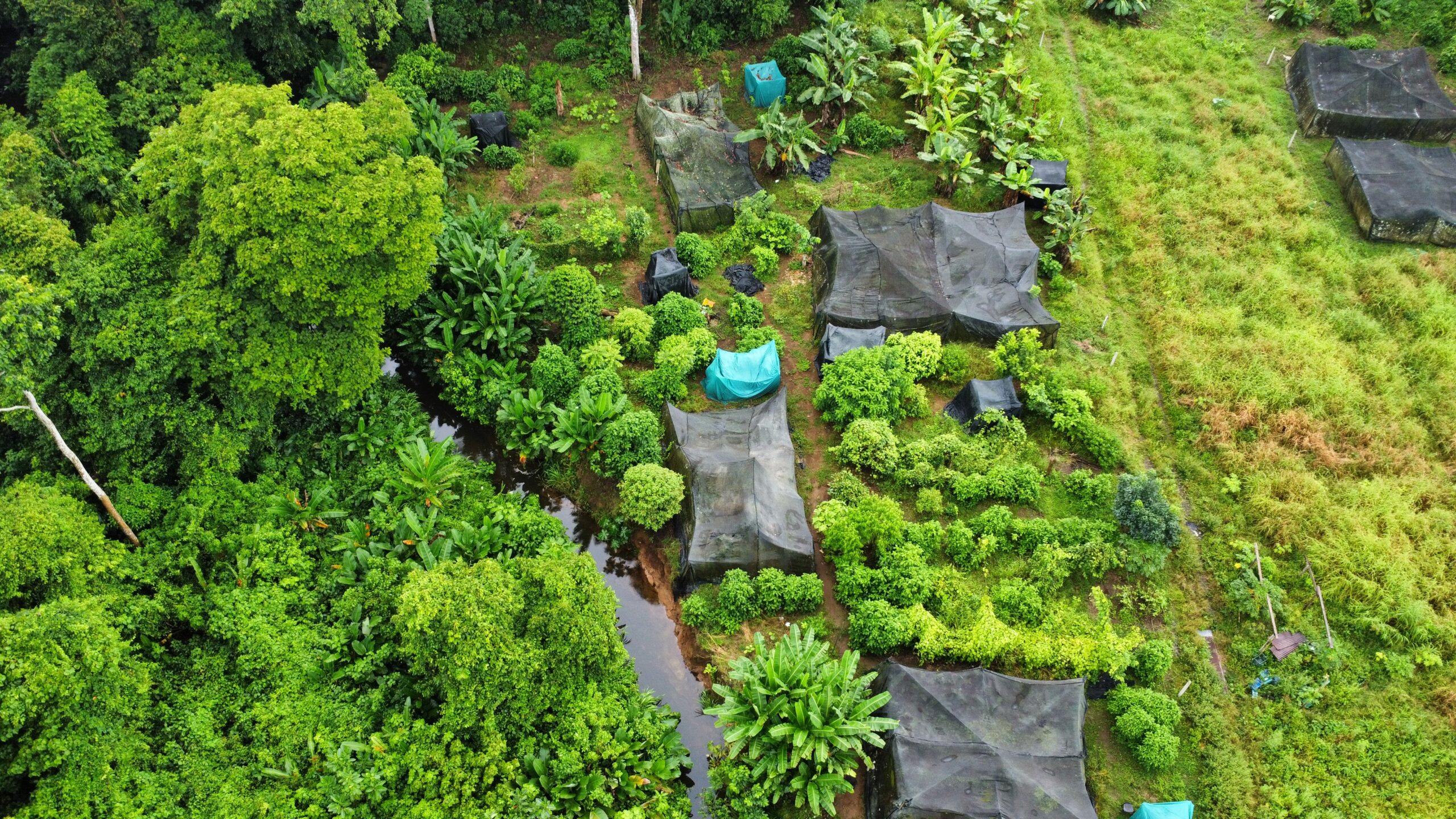
Butterfly farming fits all of these characteristics of an appropriate technology. If properly undertaken, butterfly farming is an alternative and progressive endeavor with respect to impact on the immediate surroundings to which we and other living organisms depend. In contrast to traditional farming methods in tropical countries which require the clear cutting of natural habitats, butterfly farming is dependent upon the native vegetation. In most cases, a butterfly farmer is encouraged to keep areas of land (sometimes quite large) in its intact natural vegetation. At the very least, a farmer must plant a number of native plants in and around the farm which act as a reliable food source for the larvae. Therefore, butterfly farming has an inherent mutual relationship with native plants and the habitats which they create.
In addition, butterfly farming contributes to other favorable factors. These would include the generation of rural employment, thereby supporting the rural economy and stemming rural to urban migratory patterns. If placed near a forest, such as a national park, the local human population would not only benefit economically from the park's existence, but would have a stake in the park´s integrity and survival. Butterflies certainly represent a non-traditional product for export, thereby having a favorable affect on the dependence of many countries on the capricious market for a few staple commodities such as coffee, sugar or bananas. Butterflies generate foreign exchange income for hard currency starved economies. Also in favor of butterfly farming is that it is aesthetically beautiful. Not only is the operation non-obtrusive, but it can contribute intellectual stimulation and aesthetic value to the communities its undertaken. In so far as the final product is concerned, one may argue that a country has few finer representatives abroad than its butterflies.
Aside from a motor cycle and perhaps an electric pump for irrigation, there are virtually no expensive or technologically sophisticated capital requirements. The technological simplicity of butterfly farming, therefore, minimizes the strain on a dollar starved economy to establish a butterfly breeding program. This fact furthermore eliminates the dependence of the butterfly farmer on the availability of scarce imported materials and the technical expertise to maintain sophisticated equipment. Though many people are unfamiliar with the life cycle of a butterfly, the concept can be readily understood with a modicum of explanation. The metamorphosis of a larva into a pupa and hence into an adult butterfly need be demonstrated but once for most people to grasp.
Having described some of the virtues of commercial butterfly farming, it is necessary to stress that butterflies are not a basic foodstuff that enjoy an insatiable market. Although activity such as butterfly farming is generally thought to be ideal for development purposes –and touted as such in the publications of many environmental organizations-it cannot be thought of as a cure-all for butterfly-rich, cash-poor communities. With the exception perhaps of some regions of Africa and Asia, the supply of captive bred butterflies in recent years has come to far exceed the market’s ability to absorb them. Consequently, and inevitably, there is considerable downward pressure on prices.
The daily operation of an established butterfly farm has many components. Principally, these are the entomological facet of breeding the butterflies; the horticultural duties of propagating the appropriate food plants and flowers, and inevitably the accounting and other paperwork. We will concentrate on the breeding process here. Although there are many methodologies in breeding butterflies, the following is one example of a typical procedure in Costa Rica.
A butterfly farm should be managed in a way that allows it to function symbiotically with the indigenous butterfly populations. An ideal habitat should be created by planting flowers and food plants in abundance on the farm and in the vicinity.
With the development of these plants, the farm should become a butterfly sanctuary of sorts by providing food and nectar in abundance.
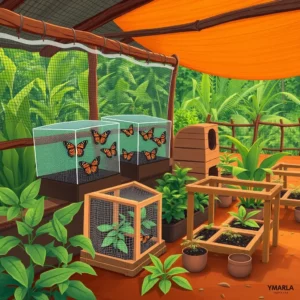
Female butterflies, caught from the wild or from captive bred stock, are released to fly freely within large enclosed structures that house the required host plants. As each butterfly species requires a specific host plant for its survival, the farmer must anticipate the species that he or she intends to breed by planting the necessary plants well in anticipation. In Costa Rica a typical flight area measures about 25 sq. meters by 3 meters high, though there are no optimal dimensions. A fresh female can typically lay upwards of a hundred eggs. Some species will lay their eggs singly over many days. Others lay gregariously in a few sittings.
The ova must be removed daily from the flight areas and placed in a secure location where predators (ants, spiders, wasps, parasitic wasps, lizards, etc.) cannot get to them. At Costa Rica Entomological Supply, the ova are placed in small, parasite and predator proof plastic boxes.
Searching for hundreds of tiny butterfly eggs in a large enclosure stuffed with foliage is not necessarily the exercise in tedium that it would seem.. The females of all species will lay only on their respective host plant. Furthermore, each species will have a preference as to where the females lay their eggs. While one species will lay on the underside of old and dried leaves, another will lay only on the tendrils of the freshest new growth. With some experience, a person will quickly discover the best places to look and make quick work of collecting the ova.
The collected ovae must be checked daily. The first instar larvae should be removed with care and place on potted food plants which in turn are placed inside cages. During the larvae´s first two weeks, of first three instars, the caterpillars eat very little. After their third instar, the larvae become voracious. It is imperative that the farmer have planted with months of anticipation sufficient food plants to feed the larvae in their latter stages. Because of the increased volume of food plant that each lava consumes, it becomes impractical to feed them on potted plants. Rather, they must be fed on cuttings. Generally, a fistful or two of the food plant will be cut for each cage. The stems will be placed in a jar of water to preserve the foliage´s freshness for twenty four hours. The larvae are then placed on the cutting to feed as they wish.
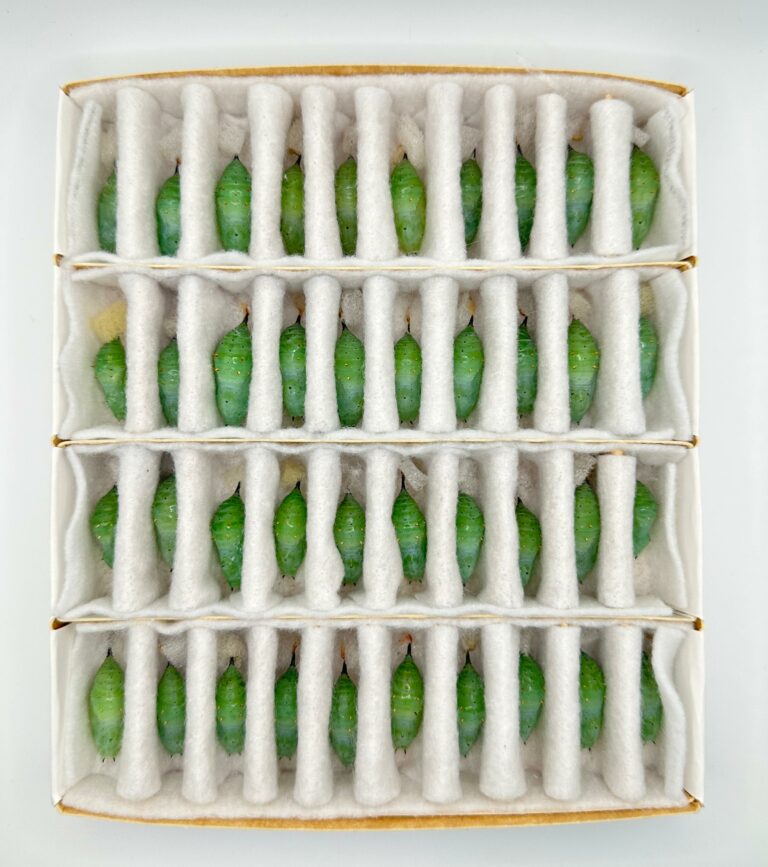
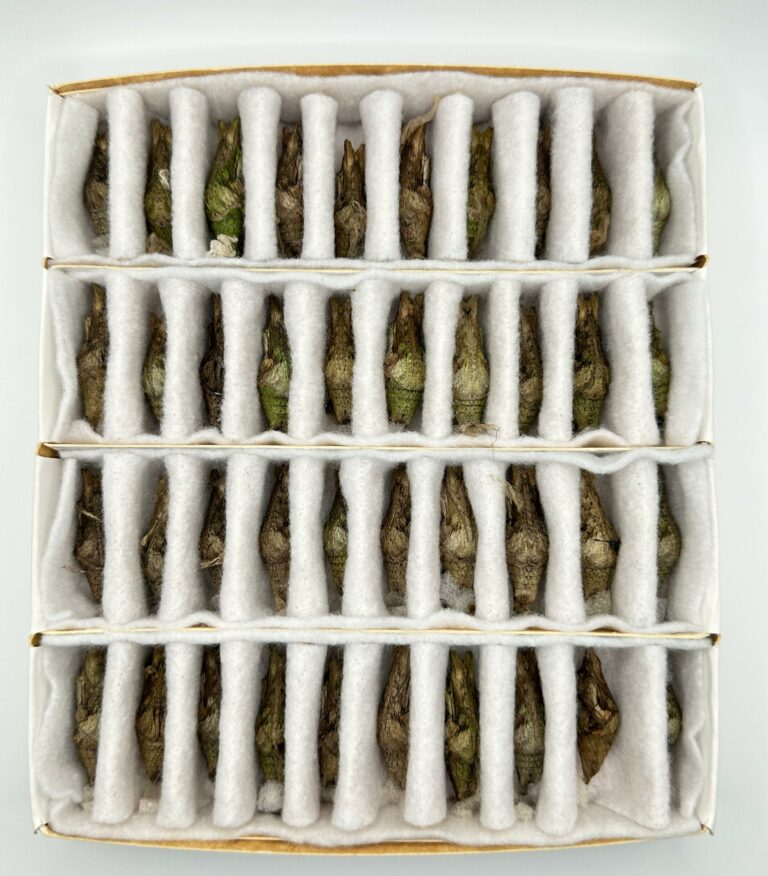
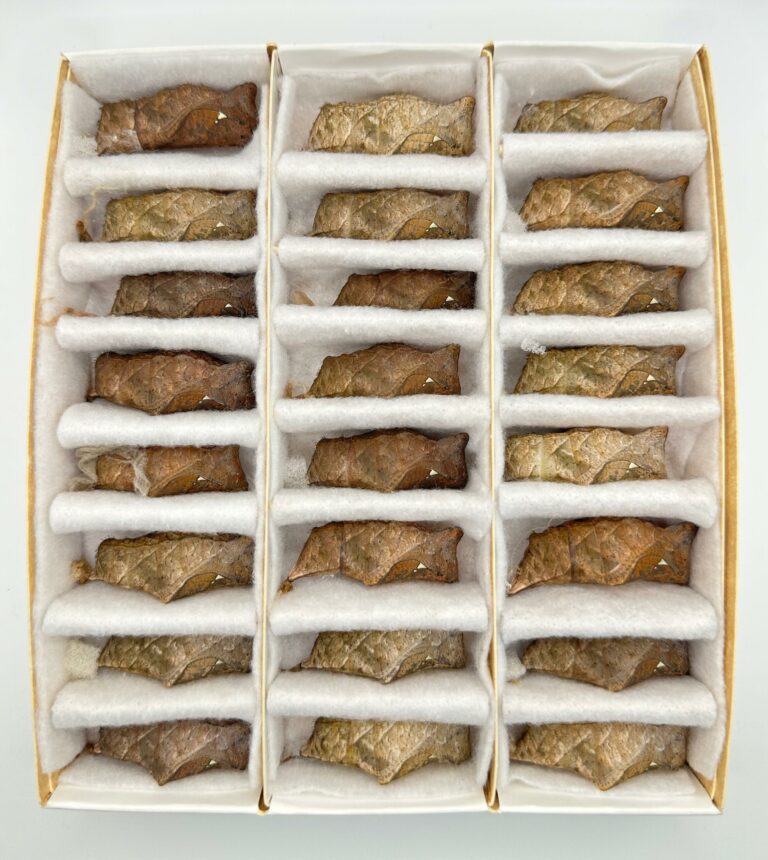
The cages must be cleaned daily. This entails removing the stems of the devoured food plants from the previous day; removing the excrement from the floor of the cages; inserting new, freshly cut host plant; and returning the larvae on to their plants. The importance of cleanliness and diligence cannot be overly stressed. Failing this, even for one day, the larvae are likely to die from and assortment of diseases, viruses or starvation. When rearing just a few or thousands of larvae, cleanliness and attention to details are indisputably a key success factor for any butterfly breeding operation. Once completed their fifth and final instar, the larvae pupate. They may attach themselves as pupae on the ceiling of the cages or on the food plants. Care must be exercised by the staff while cleaning the cages lest they inadvertently discard pupae. Someone must check the cages and remove the pupae daily. As the pupae are usually of such short duration, only by collecting the pupae daily can a farmer be sure of the age of the pupae. In Costa Rica, a pupa should not be more than three day´s old before it is shipped. Butterfly farming is by no means an easy endeavor. In the wild, butterflies may expect to enjoy a 2% survival rate between ova and adult. The 98% that perish along the way may be devoured by prey, succumb to virus or diseases or not be able subsist if the climatic conditions (drought, wind, temperatures, etc.) are not right. A successful farmer, by isolating the butterflies from Mother Nature´s biological controls, may with luck raise the survival rate from 2% to as high as 90%.
The Market for Live, Farm-Bred Butterflies
The rearing of butterflies and moths is not a new commercial activity. The Chinese silk industry, based on rearing a moth of the family Saturnidae, has been in existence for thousands of years. The breeding of butterflies for public viewing in butterfly gardens has been a serious commercial activity only since 1977.
Since the lepidopterists´ heyday during the Victorian era, butterflies have been the subject of great interest for thousands of biologists and amateur enthusiasts. Butterflies have been discussed in countless research projects ranging from genetics to population dynamics. Butterfly collecting has always been a popular hobby. Some collectors are serious about their pastime, properly identifying and preserving the specimens they have caught themselves. More casual collectors can fall into two groups. There are those that simply capture and mount whatever passes through their neighborhood for their own enjoyment and satisfaction. Others shop from the glossy picture catalogs provided by deadstock dealers. Such casual collectors are often disparagingly likened to stamp collectors, wantonly collecting butterflies to provide an attractive collage or complete a set of a particular family or genus.
Not surprisingly there are hobbyists, particularly in Great Britain, who rear butterflies from around the world in their backyards. They enjoy breeding what for them is a new species of Malaysian Papilio, watching a Morpho emerge from its chrysalis while eating their breakfast cereal, or acquiring a perfect specimen for their collection of mounted butterflies. Through clubs such as The Entomological Livestock Group, these people who number only about 2,500 in the United Kingdom, buy, sell and trade their prized commodities acquired from a handful of part time suppliers from southeast Asia. It was through the informal and low key marketing channels of this small group that allowed for the creation of today´s thriving butterfly exhibit industry.
In 1977 a man living on the island of Guernsey in the English Channel was concerned about the sagging tourist industry. Though Guernsey has always been a popular destination for the British tourists, there was little they could do during inclement weather other than sit in their hotels. At the same time the tomato industry on Guernsey had become bankrupt and consequently acres of idle green houses covered the countryside.
It was this individual´s idea to acquire a vacant greenhouse and fill it with tropical plants to recreate the essence of a tropical jungle. To add interest, color and movement, he thought to import some live butterflies acquired from Asia through a member of the hobbyist´s association previously mentioned. The resulting enclosure, complete with waterfall and meandering brook was publicized as a butterfly exhibition and opened to the public. Needless to say, the project was an enormous gamble. Not only was there no notion of how the public would respond, but there were a lot of technical unknowns. No one had ever shown live tropical butterflies to the public. How should a butterfly exhibit be arranged? Which plants should be acquired and from where? What would the ideal temperature and humidity setting be? Perhaps one of the most serious questions was how one goes about acquiring live butterflies. In 1977 there were no professional butterfly farmers in the tropics. There were only amateur hobbyists who were rearing and selling a few dozen butterflies at a time. The challenge of acquiring a thousand healthy, live tropical butterflies was a daunting one indeed.
To many people´s amazement, and in spite of all the initial problems, this man´s butterfly exhibit was a commercial success. In fact, as other exhibits were established in Guernsey´s wake, the butterfly exhibit concept quickly acquired a favorable reputation in the venture capital circles. They were seen as businesses that could produce a return within a relatively short period of time. From about 1980 until 1988 the live butterfly exhibit industry exploded in the United Kingdom. A dozen or more new butterfly exhibits were established every year. Many were stand-alone butterfly exhibits that had little else to offer the public. Other exhibits were part of wealthy estates while still others might have been an addendum to a separate business like a garden center, an appendage to attract traffic.
Typical of a fast-growing novel industry, the butterfly exhibits attracted a broad range of entrants. In the absence of industry regulation and a self-policing mechanism, the industry was fraught with shoddy exhibits. While some entrepreneurs invested with the aim of maximizing the public´s enjoyment and seeking long-term profits, others developed their exhibits with minimal investment to maximize their short-term gains. One example of the latter approach is the exhibit owner who would pin dead butterflies onto the flowers in the interest of economy. Fortunately, as the industry has evolved and matured over the past 20 years, the fly-by-nights have largely disappeared.
The exhibits in Europe are mostly supplied by butterfly brokers. Whereas in 1980 there was only one full-time professional distributor of live butterflies, a company outside of Birmingham, England called Entomological Livestock Supplies, today there are many in western Europe. These people import butterfly pupae from around the world and then mix and match the pupae to supply the needs of each of the exhibits they supply. Because butterfly pupae are highly perishable --a typical pupa will last about 10 days before the butterfly emerges-- time is of the essence. The pupae are transported by door to door courier service from the country of origin to the distributor and then repackaged and shipped within hours.
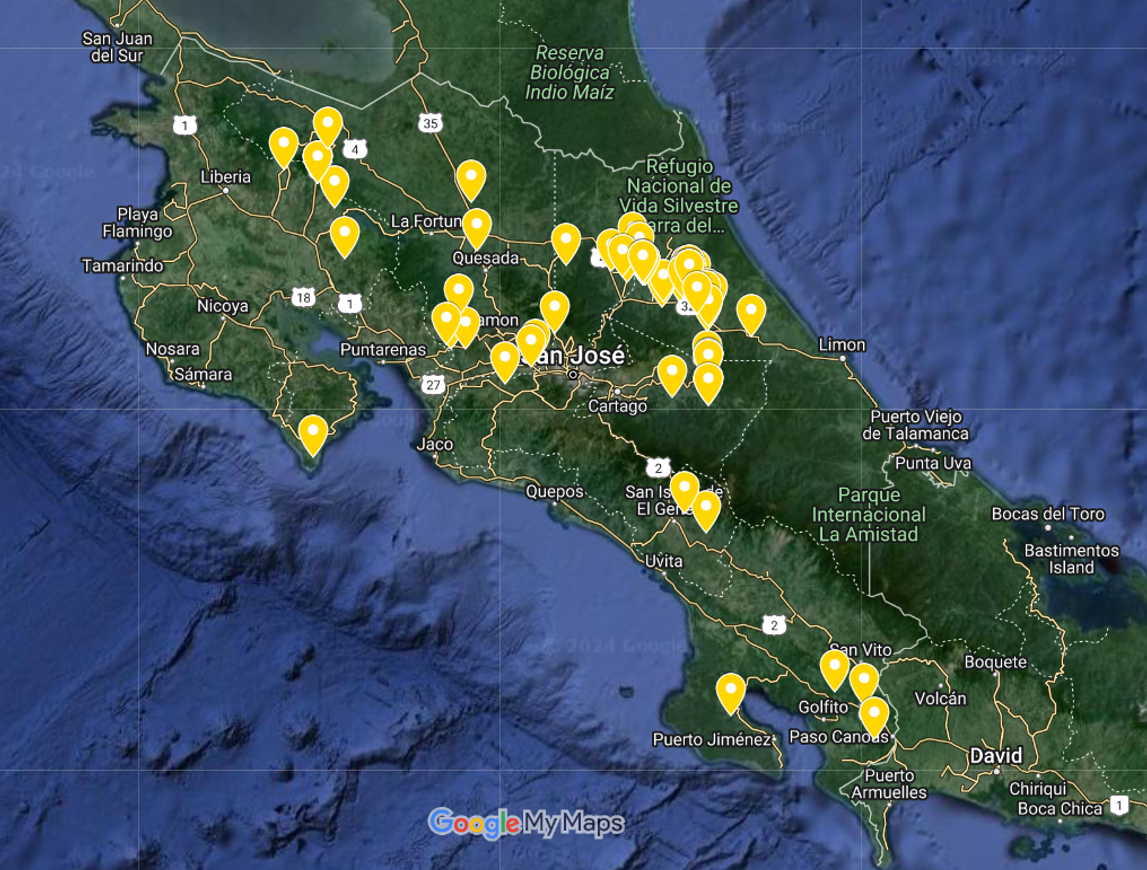
The world´s leading producers of butterfly pupae are Malaysia, Philippines, Thailand, Kenya, United States, El Salvador, Surinam, Ecuador and Costa Rica.
In recent years the butterfly exhibit industry has flourished in North America, fueling the bulk of the industry´s growth. More than a dozen major exhibits are operating today and several more are planned or under construction. North America´s largest butterfly exposition, The Niagara Parks Commission´s (Ontario) Butterfly Garden, is a $15 million dollar facility and was opened in December 1996. During one weekend in January it received 20,000 visitors.
It should not be overlooked that another growing market for live butterflies is for butterfly releases. Increasingly, people of means are purchasing large numbers of butterflies for release at weddings and other special occasions. In Costa Rica, members of the country´s legislature recently took part in a butterfly release as part of a fund raising event for street children. As each legislator released a butterfly, he would call out aloud the name of a child. The butterfly he released represented the life and aspirations of that child. One could perceive the collective hearts of all those present fly up with each passing butterfly.
It should, however, be mentioned that in the case of breeding butterflies for the purpose of release to the wild for events such as these, precaution should be taken. The effects of releasing diplaced butterflies (and displaced genetics) into other habitats and parts of the world are not known.