



































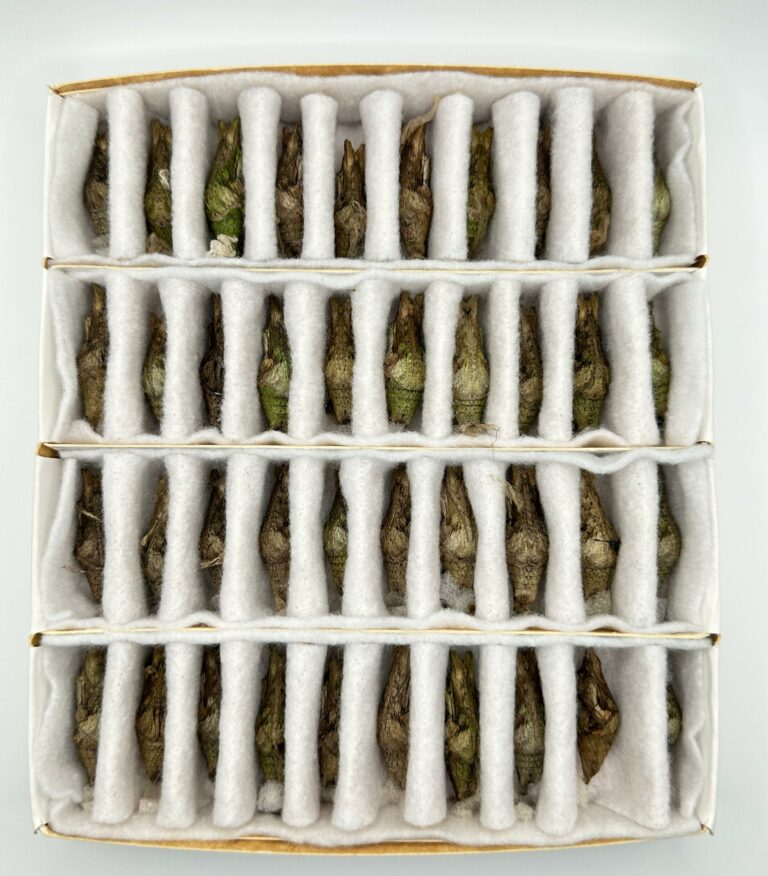
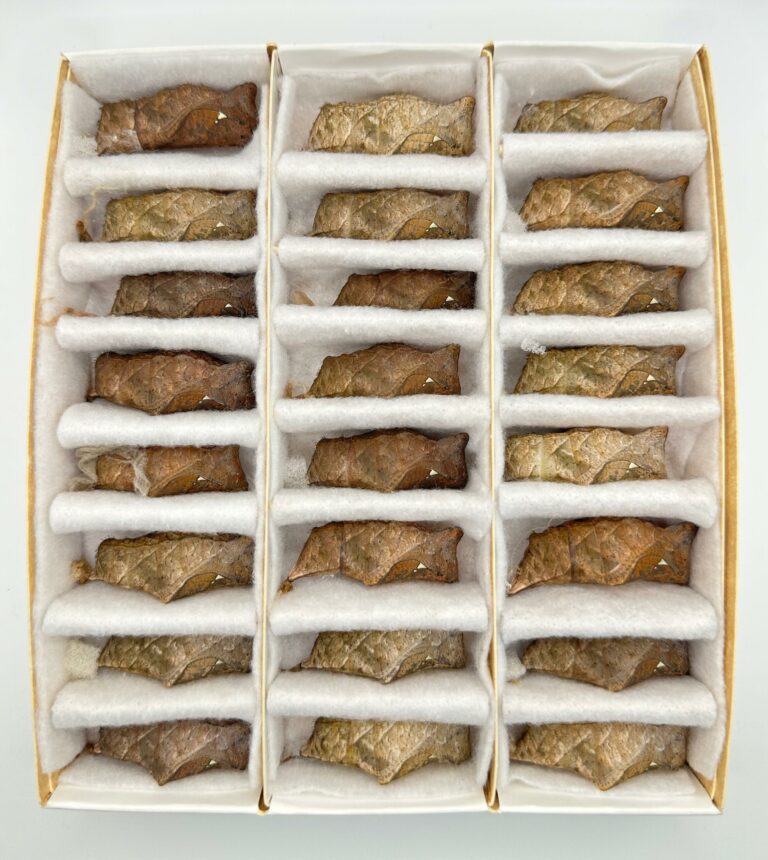
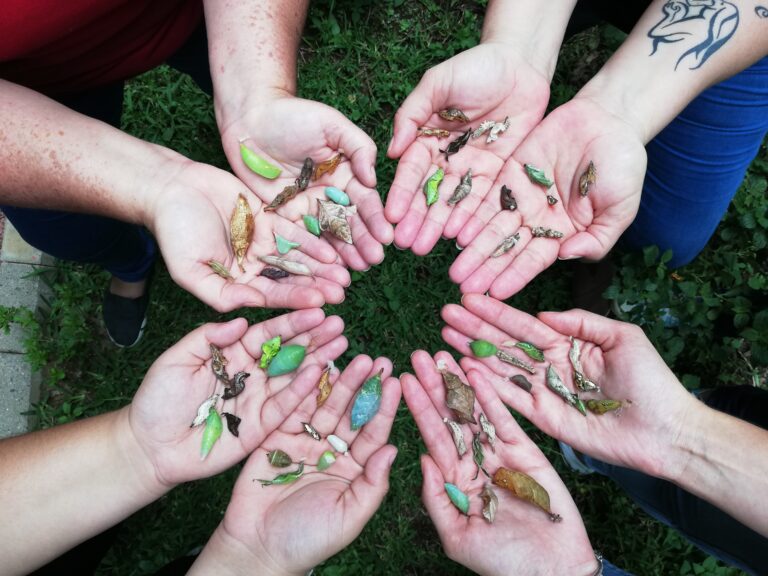
The purpose of this Student - Teacher Guide is to assist you in organizing this information into a useful format for presentation. The guide is broken down into several modules that introduce the topics of butterfly physiology and life cycle. In addition, there are several modules included to help the students better understand the general ecological relationships that butterflies have with their environment. Found within the modules are also pieces of information which pertain to the farming of butterflies, located at the end of the module.
Although this guide is ideal for students older than 8 eight years old, it can be modified to work for people of all ages. It is meant to be used in conjunction with the glossary of terms and the frequently asked questions provided in this website. Below are some important concepts which a teacher should keep in mind while presenting these modules. They are general concepts which explain many of the frequently asked questions by students and teachers alike.
Some important concepts to be taken away from these modules...
1. Butterflies are insects, and because of this they share the essential characteristics that all insects share: six legs and three body segments.
2. Butterflies pass through four stages of development throughout their life cycle: egg, larvae, pupa, and adult.
3. The two stages in which they are visibly active, the larvae and the adult, are functionally very different from each other. The "job" of the larva is to eat and grow, while the function of the adult is to mate and reproduce.
4. Butterflies in the wild have an incredibly high mortality rate -- around 98%. This is because they are primary consumers and are eaten by a very large number of predators. With this in mind, we can say that most of the butterflies' unusual characteristics, colors, and structures contribute towards protection from predators. These we call defense mechanisms. Therefore, most questions on characteristics beginning with "why" can be answered with this in mind.
5. Like all other living organisms which we classify as "wildlife," butterflies are very dependent on certain types of plants and habitats in order to survive. In the case of butterflies this relationship is often incredibly specific. Since butterflies have very close relationships with their host plants, the protecting of plants and natural habitats in the wild is essential for their survival. In order to conserve butterflies, we must conserve their habitat.
Most of this information was compiled by Evan Fitzgerald, an intern at The Butterfly Farm in 1999. Evan graduated from the University of New Hampshire with a Bachelor's Degree in Environmental Science.
Butterfly Phisiology and Anatomy
Butterflies are insects. By definition, all insects posses six legs and three body segments: head, thorax and abdomen. In both of the active stages of a butterfly's life cycle, the larvae and adult, these traits can be observed. Butterflies have a complex life cycle consisting of four different stages, each with completely different appearances and durations of time. Although each species of butterfly has a different length of time in which it lives, all have the same four stages of growth: egg, larvae, pupa, and adult. The average length of time that a butterfly lives (including all four stages) is about three months. As adults, most butterflies live around one month's time.
Adult Butterfly Anatomy
Head
The three most salient features of the head are the antennae, the eyes and the proboscis. The antennae are used for balance in flight and olefactory sensation. Butterflies possess fragile wings. The wings can wear easily through normal use. They can also be badly damaged by predators which when attacking the butterfly grab only the wing rather than the body. Despite the loss of even the majority of their wing surface area, a butterfly will continue to be able to fly and navigate. They can do this because of the sense of balance afforded them by their antennae.
The antennae are also useful for smell. Female butterflies release pheromones (like a perfume) into the air. The male butterflies of many species can detect the pheromones from as far away as 2 kilometers (over a mile). Depending on the concentration of the pheromones, the male will be able to find the female to mate with her. It's worth noting that some species of moths are sensitive to the presence of the females' pheromones up to five kilometers (about three miles) distance.
The eyes of butterflies are large spherical structures. These are compound eyes consisting of thousands of hexagonal shaped omatidea. Each omatidea, or minuscule sensor, is directed at a slightly different angle from the others. Collectively they are directed in every direction-up, down, forwards, backwards, left and right. Because of this, butterflies are able to see in virtually every direction simultaneously.
There is a price to pay for having an exceedingly small brain and omni-vision. Butterflies cannot focus their vision as what they see is at best a blur. Furthermore, they are sensitive to only the three most basic features of vision which would be light, color and motion. Butterflies can distinguish night from day. They might distinguish color along a very narrow band of the light spectrum. Hence a butterfly might see and feed from the nectar of a purple flower but be oblivious to the red flower nearby. Butterflies are also sensitive to movement. When you try to catch a butterfly with your hand, it won't think, "Here comes Billie's hand." It would however be aware that something big out there is moving, getting closer and it's time to fly.
Butterflies do not have teeth or mandibles. Rather, their feeding mechanism is a long double barreled tube called a proboscis. Because they feed through what is essentially a double barreled straw, butterfly diets are exclusively liquids. The preferred diets will vary considerably depending upon the butterfly species. While people generally think of butterflies as feeding from the nectar of flowers, other common diets include fruits, mud, cow dung, water and tree sap.
Thorax
The thorax, the middle body segment, connects the butterflies' appendages-the six legs and four wings. The butterflies' ears, tight membranes similar to a human eardrum are also located here. Though it cannot be seen, these membranes have hairs just under them. When a sound wave hits the membrane, the membrane vibrates and touches these hairs. When stimulated, the hairs send a message to the brain indicating the direction and distance of the sound from the individual.
Abdomen
A butterfly's circulatory system is relatively simple. The heart is a pump attached to a long tube that extends from the abdomen to the head. The blood is pumped through this tube and released into the tissues. Through a pressure gradient, the blood seeps through the tissue back to the abdomen. There it is sucked back into the heart and pumped forward again.
In a butterfly, there is no transportation of oxygen in the blood. Butterflies have valves called spiracles along either side of their bodies. Some of these spiracles, located mostly along the abdomen, allow oxygen to enter. Other spiracles exhale carbon dioxide. In this way oxygen will enter the body directly and once inside, there is a network of tunnels similar to the network of veins in the human body. Oxygen will travel directly to where it is needed and pass into the tissue.
The structures of the reproductive system of adult butterflies, as well as other aspects of reproduction, will be discussed extensively in the next module.
The Larval (Caterpillar) Stage
The function of the larva is very simple: to eat and grow. Coupled with a giant stomach and the ability to shed its skin, the larva is an eating machine designed to gather the energy necessary to transform into the adult. The duration of time in this stage averages about three to four weeks. Larvae, being insects, have six legs, and although less pronounced than the adult, three body segments -- head, thorax and abdomen.
Head
The larvae have mandibles for chewing their food. The mandibles must be strong to break though the leaf and crush it. Here we have one of the major differences between the larvae and adult stage. Larvae eat only solid plant material from their host plant, whereas adults eat only liquids. It is also important to bear in mind tha the larval host plant has nothing to do with the adult's diet.
The eyes of a larva serve for little more than distinguishing day from night. Because caterpillars need to be as inconspicuous as possible from predators, most are nocturnal feeders. During daylight hours they remain motionless in discreet corners of their host-plant.
Underneath the head are glands which exude a liquid which when exposed to the air forms silk strands. The silk strands can be useful for three reasons. First, they secure the larva to the surface they are walking on. Second, some species use the silk as an escape route. For example, when an ant attacks a small larva, the larva may drop off of the leaf and dangle from the thread in midair. Third, the silk will be used to form a "button of silk" from which the pre-pupa will attach itself to the underside of the leaf where it will hang.
Thorax
The thorax is a short segment of the larva. It is distinguished by being immediately behind the head and possessing the three pair of true legs on the underside. When later transformed to the adult butterfly, the wings will extend from the area directly above the true legs.
The thorax of the larva from above is very inconspicuous and hard to distinguish from its other parts. The best way to recognize this segment of the larvae is to turn it over where the six true legs can be seen underneath. Where the last pair of legs end is where the thorax changes to abdomen.
Abdomen
The abdomen, consisting mostly of the digestive system, represents the largest segment of the larva. As the larva spends most of its active hours feeding on its host plant, the abdomen is where the "giant stomach" is found. In some cases, the abdomen can represent as much as 80% of the entire body size.
On the underside of the abdomen are a number of prolegs or "sucker-feet". This is a misnomer as the prolegs do not have suction cups at all. Rather, they are equipped with thousands of tiny hooks (very much like Velcro) which assist with walking. As the larva lays down a sticky silk pad, the hooks on the prolegs will firmly grasp the silk. In this way larvae may attach themselves securely to whatever surface they may walk on no matter how sheer.
Along the sides of the abdomen one may find a series of spots. These are the spiracles -- valves extending the length of the larva's body which allow the larva to breath.
Larvae, rather than having internal skeletons have exoskeletons. As the larvae grow they must shed their skins just as snakes and shell fish do. This process of shedding the exoskeleton or skin is called molting, and each successive molt produces a new "instar." The word instar refers to the stage of development of the larva. When a larva emerges from its egg it is a first instar larva, and molting four times the larvae will pass through five instars. At the end of the larva's fifth instar it will have reached its full size and form the prepupa. Inside the larva's body already exist all the parts of the butterfly. There is no complete breakdown of the larva and reformation to a butterfly. There is merely a specialization of body parts. The larva as a basic butterfly with additional parts to allow it to behave like a caterpillar. These additional parts would be suction feet, strong mandibles, a long body, and an enormous stomach.
The larval stage is the only stage of butterfly development where the organism grows. Take note of how different the larval stage is from the adult butterfly stage, not only in appearence, but function as well. The funcion of the larva is simply to eat, grow, and gather the energy needed to transform into an adult while inside the pupa. The larva will grow from the size of a tiny egg to the proper size for the adult. The growth rate is phenomenal. For example, were a normal 7 pound human baby to grow at the same rate as a Monarch larva, in just one short month that baby would be the size of a London double-decker bus and weigh many, many tons!
Prepupa
As the larva reaches its full grown size in the final instar, it begins a stage just before the pupa stage known as the prepupa. Here the larva stops eating its host plant, empties its stomach, and begins wandering to find an ideal spot in which to become a pupa. The larva may wander long distances (with respect to its size), sometimes down and off their host plant and up another. When an ideal spot is found, the larva will once again use its silk glands to hang itself upside-down. This is a very delicate manuver in which the larva will attach its hind prolegs to the surface where it is hanging. The larva will create a small ball of silk to make this attachment, which is called a cremaster. Once attached, now hanging upside-down, it will slowly begin to condense its body. While condensing, the larva is also forming the outer layer of the pupa beneath its exoskeleton. These two processes occur simultaneously so that when the larva sheds its skin one last time, the pupa is formed beneath.
Reproduction

The penis enters the female at the same location where the eggs come out. When the male ejaculates, the semen enters a small storage pouch inside the females abdomen, called a spermathecae. After mating, the female has about 100 eggs inside her and a pouch full of the male spermatozoa. When ready to deposit her eggs, she will perform a kind of self-fertilization. When she places an egg on the host-plant, as the egg is passing out of her ovipositor, it will pass this pouch. At that instant, one spermatozoa will fertilize the egg and determine its sex. When the egg is first placed on the leaf, it was fertilized less than a second before.
The fact that the female has the ability to decide when to lay the eggs is an interesting and important point. Since the eggs are deposited on the host plant, the female is able to pick the most favorable spot to lay her eggs. If she did not have this self-fertilization ability, she would be forced to lay her eggs all at once, perhaps jepordizing the health of some of her offspring.
A typical female butterfly will lay about 100 eggs in her lifetime. Some species lay their eggs gregariously (in clusters). Other species lay their eggs individually on widely dispersed plants. One school of thought argues for "survival in numbers," while the other takes the perspective, "don't put all of your eggs in one basket." Both approaches are valid, but only just sufficiently to ensure the survival of the species.
Of the 100 or so eggs that may be laid, only 2% should be expected to survive to become healthy and reproductive adult butterflies. This figure is reasonable since in the aggregate one egg will replace the female and the other the male. The other 98% will fall by the wayside in the course of their development as eggs, larvae, pupae and emerging adults.
The reasons for this high mortality rate are several. The most important causes include climatic conditions (wind, drought and rain); diseases caused by virus and bacteria; and predators. See also Defense Mechanisms in this guide.
Butterfly Natural History and Biology
asdfButterflies and Plants
Having mated, the female butterflies lay their eggs on the leaves and stems of particular plants. The females use the sensory capabilities in their antennae to detect their correct host plant. Upon emerging from the ova (egg) the larvae (caterpillars) will proceed to eat the leaves of the plants they were laid on. These plants are called host plants.
The relationship between any given butterfly species and it's host plant(s) is very specific, and specific for very good reasons. Many butterflies will lay their eggs on a single species of plants, whereas most will prefer groups of very closely related plants. From the host plants is where the larvae obtain all the necessary nutrients and chemicals they need to produce their colors and other characteristics as adults. For example, the butterflies which are toxic in their adult stages (see Defense Mechanisms) depend upon their specific host plants for ingesting and accumulating these toxins. In the example of the Monarch which feeds on milkweed (Asclepias), the larva will slowly accumulate toxins from the leaves in amounts which it can handle. Then, as the larva becomes an adult, it carries these toxins with it and is poisonous to any predators that would feed on it. In this manner, many butterflies are dependent upon toxic plants in order to be toxic to predators.
Some of the butterfly - host plant relationships for some common Costa Rican species are as follows.
Butterfly Genus Host plant
Parides sp. Aristolochia
Battus polydamus
Anteos chlorinde Cassia
Phoebis sp.
Hamadryas sp. Dalechampia
Adelpha fessonia Randia
Heraclides thoas Piperaceae
Papilio cresphontes Citrus
Dione juno Passiflora
Agraulis vanillae
Dryas iulia
Heliconius sp.
Caligo sp. Musa, Heliconia
Danaus plexippus (Monarch) Asclepias (Milkweed)
Butterflies, their Habitats, and Conservation
People from all parts of the world often wonder, "What happened to the butterflies that we saw when we were children?" The sad but true answer to this question is that they are gone. As mankind cultivates the land, builds roads, houses, shopping centers and butterfly exhibits, he is fundamentally changing the landscape. Forested and other natural habitats are destroyed, and so too are butterfly host-plants which are generally taken for useless weeds. So as we "progress", butterfly populations and wildlife in general regress.
In order to protect the butterflies and other wildlife of the world, we as humans need to take a step back and look at the footprint we are leaving on our surroundings. In the example of butterflies, the logical first step in protecting them is to not collect and kill them, or to limit the amount of insecticides we use on our crops. While these are both valid steps toward protecting butterflies, we must focus more of our attention on their "habitat". Without sufficient areas of natural habitats that contain the host plants to sustain the larvae, their will be no butterflies. As humans we need to recognize this dilemma as we decide how we are using our land and natural resources.
A very common question in the guided tour here at The Butterfly Farm in Costa Rica is: "Why aren't you breeding rare or endangered species and releasing them into the wild?". The answer to this question involves this same concept of habitat destruction described above. Even if we were to breed hundreds upon hundreds of endangered species here at the farm for releasing in the wild, the effect on the number of individuals in the wild would be very insignificant. The number of butterflies of a certain species in the wild is reflective of the size of its habitat. Therefore, to increase populations of endangered species in the wild, we need to increase the habitat of that butterfly first.
Migratory Butterflies
Lets start with a very brief description of non migratory butterflies. A female hatches out of the pupa and her program says to mate and begin laying eggs right away in the immediate location. Every female of this species has this program. They will quickly seek a male, mate, and lay their eggs on the host-plant.
A migratory butterfly however, has a different program. The big question is where does this program come from? Also, what triggers the running of the program which, in turn, makes the butterflies leave their present location and head for another. It could be climate conditions , or temperature, or an internal clock that sends them on their way.
For most of the rainy season, the butterflies of the Pacific coast in Costa Rica have a program that says lay your eggs in the same area where you hatched. So, the butterflies live their lives in the same place. At the end of the rains, the females that come out have a different program that says "seek out the rains and lay your eggs there." Off they go to the Atlantic slope and there they will stay until the rains return the following year. Essentially, they are searching for the ideal climate to reproduce themselves.
Now for the Monarchs. The monarch feeds on milkweed. The milkweed needs warmth and moisture to grow. At the end of the summer in southern Canada and the northern United States, Monarchs come out of the cocoon and their program says "winter is coming here soon, you must seek warmth and lay your eggs next spring". They seek warmth by flying down to Mexico. They arrive in November. There are literally millions of them. They will sit on these trees until springtime when the first milkweed of the new year is coming out along the Gulf of Mexico. When that happens, they will fly there, lay their eggs, and die. Realize that butterfly just lived 9 months and flew nearly 5,000 kilometers. If that's what it takes for the species to exist, that's what it will do.
These eggs on the Gulf of Mexico will mature and fly to the central (north-south) of the United States. Because their journey is not as long, they don't live as long. They will fly for a couple of weeks, lay their eggs at their destination and die.
The next generation will do the same. Notice that they are moving up the states at the same pace as spring and summer. They are following a constant climate. This generation comes out at the end of the summer and they have the same program as their great grandparents did. They fly all the way back to Mexico where they will wait out the next spring.
The Monarchs of Costa Rica are non-migratory because their need for a warm climate is always satisfied. They live three weeks and lay their eggs in the local area.
Defense Mechanisms
Throughout the four distinct phases of their lives, butterflies exhibit many peculiar and unusual characteristics in the form of: colors, appendages, camouflage, etc. Why is this? Much of the answer lies in the fact that butterflies are essentially food to the many hungry animals and insects which are known as predators. There is little that would not want to eat a butterfly in one stage or another, and the following is an abbreviated list of some of these predators: ants, spiders, wasps, parasitic wasps, parasitic flies, birds, rats, toads, lizards, praying mantis, snakes, and monkeys.
Through years and years of evolution and adaption, butterflies have developed many means to protect themselves from these predators. Below we will talk about a few different defense mechanisms in the stages of the butterfly life cycle.
Camouflage
There are numerous examples of camouflage used by butterflies in all different stages of their life cycle. This camouflage helps them blend in with their surroundings and elude this long list of predators. In the egg stage of the butterfly, we can see this trait very well in the eggs of the Blue Morpho (Morpho spp.), which blend themselves very well with the color of its host plants in the family Leguminosae.
In the small picture here to the right we can see the small eggs of the Morpho laid singly on the host plants. These eggs are nearly transparent, and after a rain, when there are raindrops on the surface of the leaves, these eggs are incredibly hard to distinguish and pick out from the raindrops.
In the larva and pupa stages of butterflies we can see numerous examples of how different butterflies use certain colors and patterns on their exoskeleton or chrysalis to deter or fend off predators. In some species, these traits come in the form of colors which blend themselves in within the branches of their host plant, while others actually appear like a whole different organism which a predator would not dare to mess with, such as a snake. Here on the left we can see an example of how a Morpho pupa is appearing much like an unripe fruit as it hangs from its host plant.
Toxic Butterflies and their Mimics
Bad tasting butterflies are colorful as adults and have toxins in their bodies that make the predator sick. The predator once having suffered the consequences of consuming such a butterfly will easily remember the bright color of the wings. It will know from that time on to avoid that color pattern. Although one butterfly will be killed from such an encounter, many more will live.
Good tasting butterflies are butterflies that, when eaten, are agreeable with the consumer and most defend themselves accordingly. There are two ways to do it. To be good tasting and bright is dangerous for an appetizing butterfly. Therefore the good tasting species camouflage themselves by using dull colors which blend into their surroundings well.
Mimicry is another effective defense. It is used by brightly colored species that are also good tasting. Their bright color patterns have evolved to appear like those of the poisonous butterflies. One example is the orange and black colored Viceroy which is strikingly similar to the poisonous Monarch. A predator that's experienced a monarch would never again venture consuming another orange and black specimen.
The Differences between Moths and Butterflies
What is the difference between a moth and a butterfly?
There isn't a single defining characteristic that defines what is a moth versus a butterfly. Rather, there are a number of suggestive characteristics. The following is a partial list of their distinguishing differences.
1. Butterfly fly by day while moths generally fly at night. However, there are some day flying moths as well as butterflies that fly at dusk.
2. A butterfly always has a feeding mechanism (a proboscis), whereas a moth often does not. These moths simply do not eat as adults. They live off the body fat that they'd acquired while eating as larvae.
3. A butterfly normally rests with its wings closed while a moth lands with its wings open. A notable exception are the butterflies of the Hamadryas genus (photo to the right) that always land with their wings opened flat.
4. A butterfly forms a chrysalis that hangs or adheres to a tree. The chyrsalis is formed without silk. A moth forms a cocoon, usually on the ground and is surrounded by silk.
5. The antennae of a butterfly are straight and club-like. The antennae of a moth vary greatly but are usually brush-like with a great deal more surface area.
Some similarities Between Moths and Butterflies
Butterflies and moths both belong to the order of insects that we call Lepidoptera. Although there are certain differences between moths and butterflies as mentioned above, there are many similarities as well.
Lepidoptera translated from Greek means "scaled wings." Lepi means scales (i.e. leprosy) and optera refers to wings. All moths and butterflies share the trait that they have tiny three dimensional scale-like structures on their wings which function in a couple of ways. First, these scales produce many of the brillant colors that we see on these insects as they are flying or simply resting. Second, in the case of many butterflies, as light passes through these scales, it is reflected differently. In many cases the resulting appearance is a brillant and iridescent color. Furthermore, these scales help repel water from their wings. Both moths and butterflies go through the same four stages of the life cycle: egg, larva, pupa, and adult.
Butterfly Taxonomy and Systematics
asdf