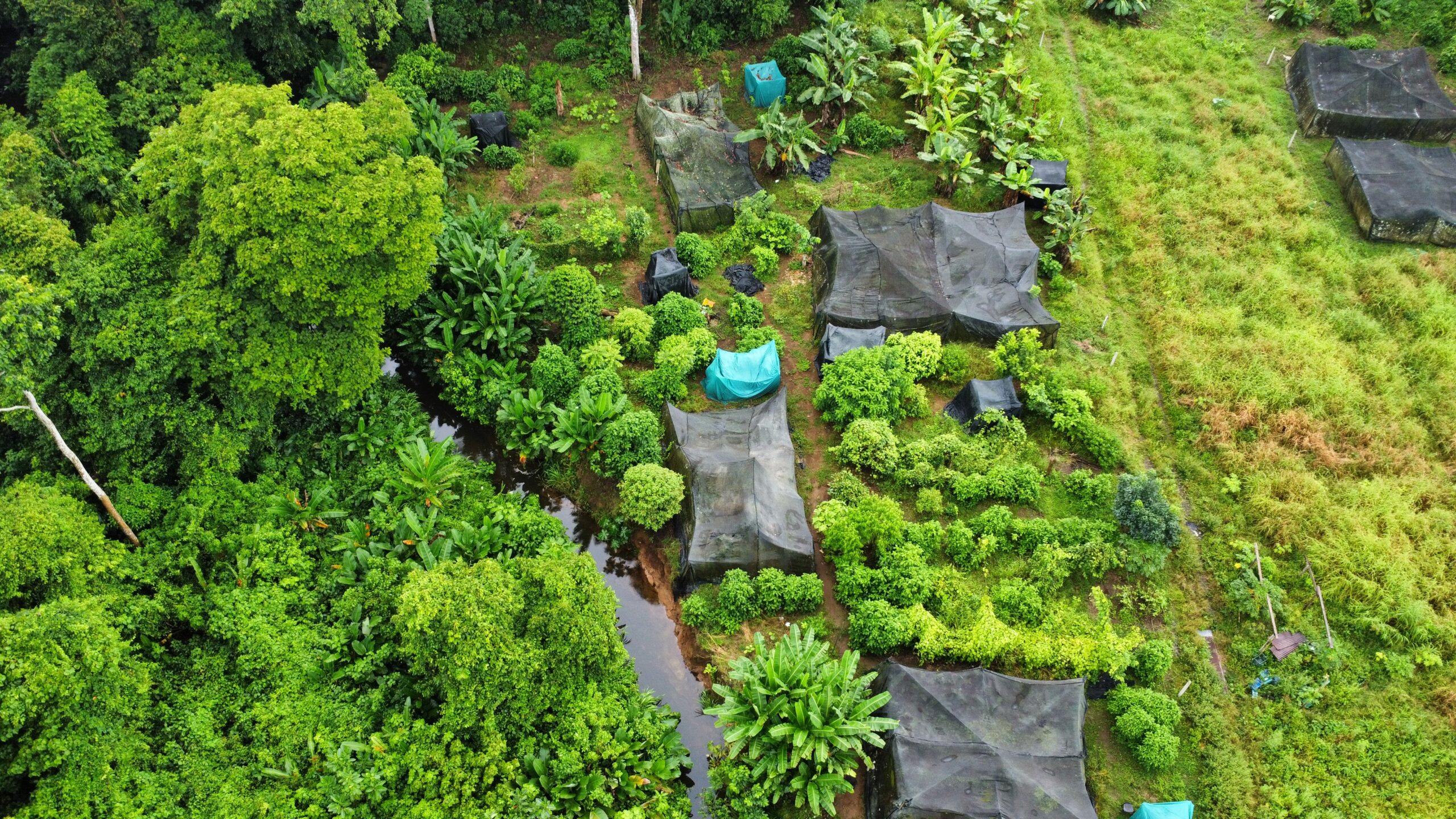




































To breed butterflies, farmers collect a few adult specimens from the wild and release them in enclosures called "viveros." Once released inside, the females oviposit (lay their eggs) on the leaves of their host plants. In this image we see rows of Passiflora vines, the required hostplant for Heliconius butterflies. To protect the ovae (eggs) and larvae (caterpillars) from predators such as ants and wasps, they must be collected every morning.
Photo: J.A. Brinckerhoff
The butterfly enclosures are usually situated in the breeders' back yards, right off the back porch. It's easy for the whole family to get involved, from the smallest children collecting eggs to the grandparents that may enjoy tending to the plants.
Photo: E. Grosman
The farmers' "laboratories" may seem rustic -- and they are -- but they're inexpensive and very effective. Rather than concentrating the rearing of butterflies in expensive and centrally controlled hi-tech laboratories, CRES has long pursued a model that allows hard working people of modest means to develop their own businesses.
These plastic buckets are easy to disinfect frequently.
Photo: M.G. Blaese
Prepupae and pupae of Morpho peleides. Notice the shed exoskeletons on the floor of the bottom compartment. These pupae will likely be delivered to CRES' office the next day for export.
Photo: J.A. Brinckerhoff
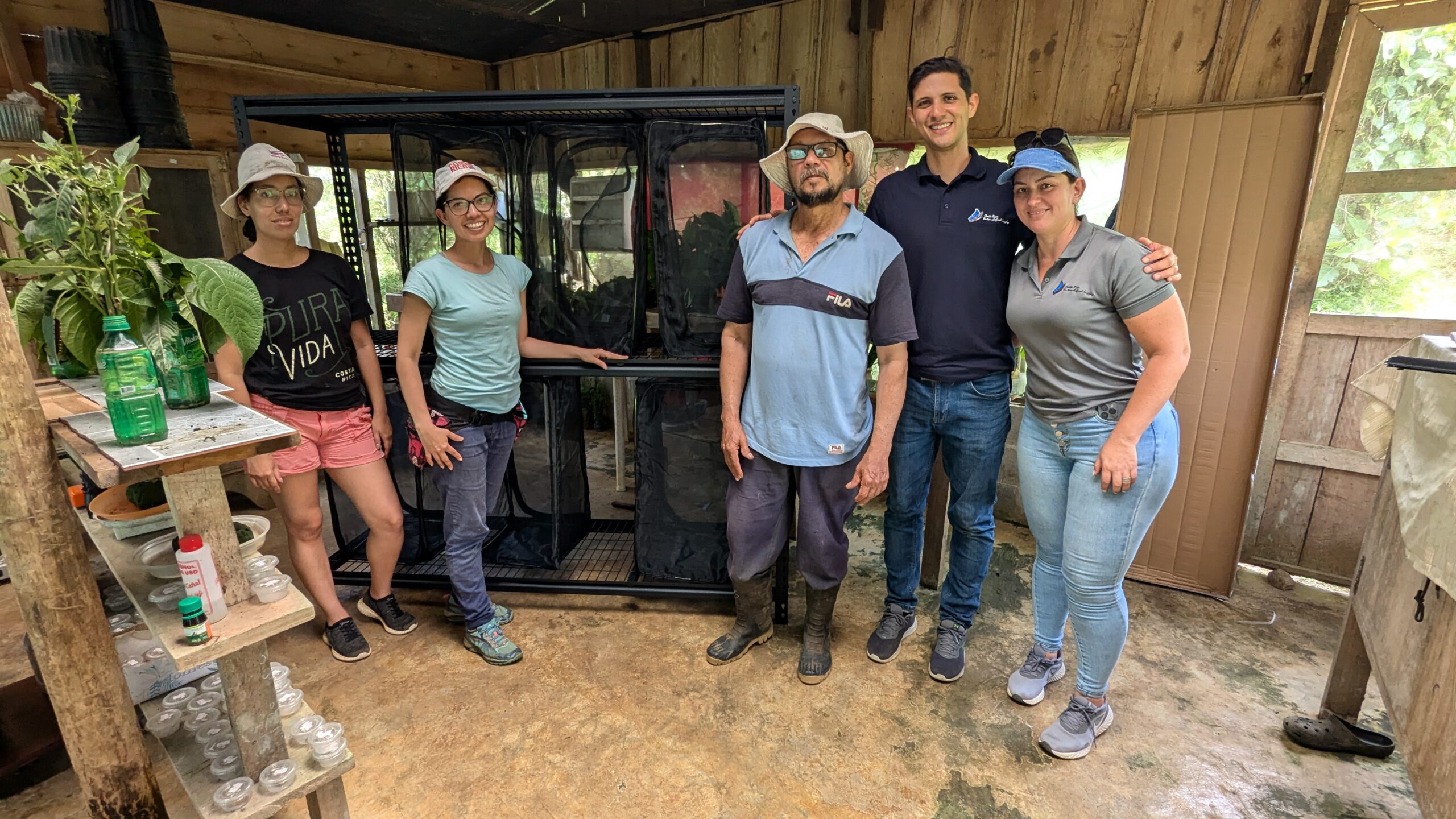
This farmer works in a spacious and well ventilated laboratory which is typical. The larvae are being reared in the cages towards the back of the photo on the right. An avid amateur zoologist, his collection of local artifacts of skeletons and preserved snakes is on display in the foreground on the left.
Photo: J.A. Brinckerhoff
An assembly of Morpho peleides feeding on banana.
Depending on the species, butterflies feed on a variety of sources. The nectar of flowers and rotting fruit predominate but it's very common to see butterflies feeding on fresh cow dung in the pastures.
Photo: E. Grosman
A breeder's laboratory. The larvae are fed freshly cut host plant each morning. Farming butterflies is very labor intensive and the caterpillars need attention 365 days a year.
Photo: J.A. Brinckerhoff
Butterfly farming requires the collection of a few adults (preferably females) that are released in enclosures such as these that contain the specific larval host plants that the butterflies require for laying. The larvae will be reared for 1 to 3 months until they pupae. Hopefully, market conditions permitting on export day, the great majority will be exported to butterfly exhibits worldwide. Those that aren't exported will be returned to the farmer for re-breeding purposes.
Photo: M.G. Blaese
Here we see 5th instar larvae of Morpho peleides feeding on their larval host plant. They will soon wander off to continue their metamorphosis by entering their pupal stage.
Photo: J.A. Brinckerhoff
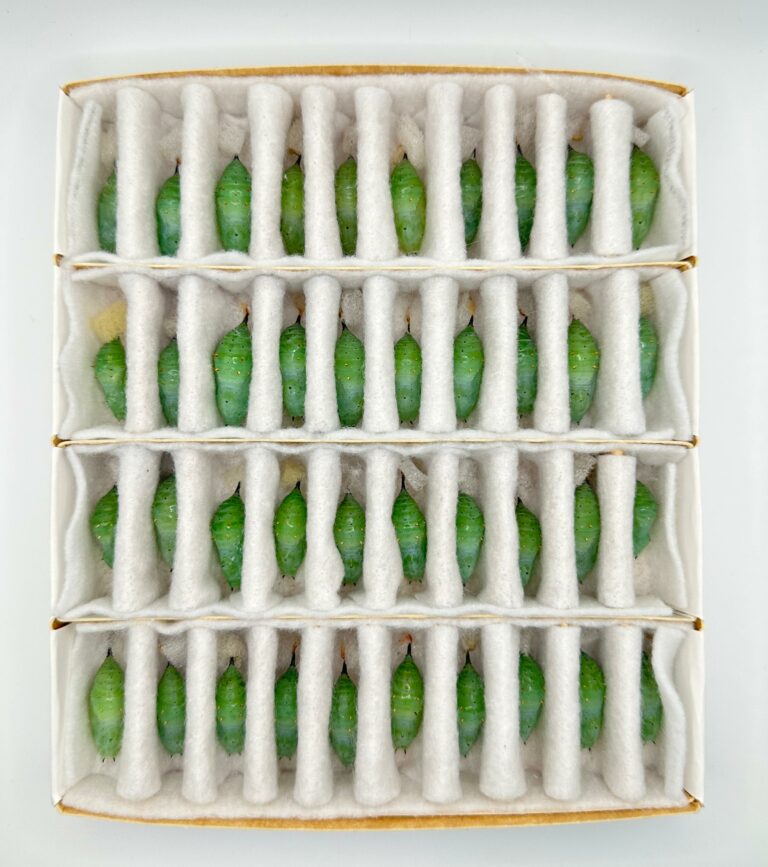
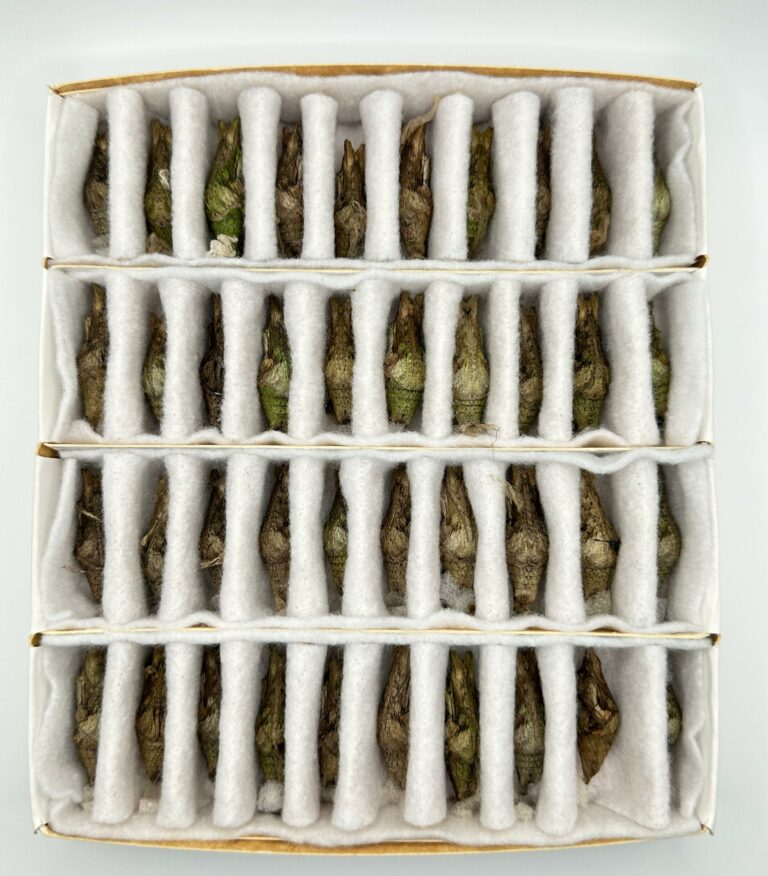
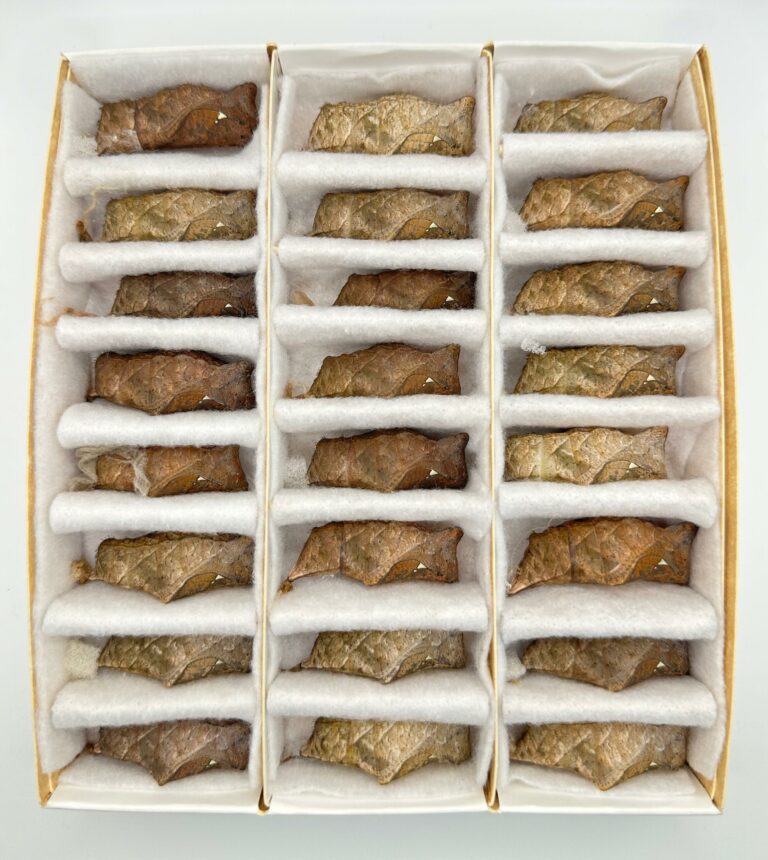
After the pupae have formed they must be safely stored until they're sent to CRES' office. This breeder chooses to store them in Styrofoam boxes which serve admirably for the purpose.
Photo: J.A. Brinckerhoff
To breed butterflies, farmers collect a few adult specimens from the wild and release them in enclosures called "viveros." Once released inside, the females oviposit (lay their eggs) on the leaves of their host plants. In this image we see rows of Passiflora vines, the required hostplant for Heliconius butterflies. To protect the ovae (eggs) and larvae (caterpillars) from predators such as ants and wasps, they must be collected every morning.
Photo: J.A. Brinckerhoff
The butterfly enclosures are usually situated in the breeders' back yards, right off the back porch. It's easy for the whole family to get involved, from the smallest children collecting eggs to the grandparents that may enjoy tending to the plants.
Photo: E. Grosman
The farmers' "laboratories" may seem rustic -- and they are -- but they're inexpensive and very effective. Rather than concentrating the rearing of butterflies in expensive and centrally controlled hi-tech laboratories, CRES has long pursued a model that allows hard working people of modest means to develop their own businesses.
These plastic buckets are easy to disinfect frequently.
Photo: M.G. Blaese
Prepupae and pupae of Morpho peleides. Notice the shed exoskeletons on the floor of the bottom compartment. These pupae will likely be delivered to CRES' office the next day for export.
Photo: J.A. Brinckerhoff
This farmer works in a spacious and well ventilated laboratory which is typical. The larvae are being reared in the cages towards the back of the photo on the right. An avid amateur zoologist, his collection of local artifacts of skeletons and preserved snakes is on display in the foreground on the left.
Photo: J.A. Brinckerhoff
An assembly of Morpho peleides feeding on banana.
Depending on the species, butterflies feed on a variety of sources. The nectar of flowers and rotting fruit predominate but it's very common to see butterflies feeding on fresh cow dung in the pastures.
Photo: E. Grosman
A breeder's laboratory. The larvae are fed freshly cut host plant each morning. Farming butterflies is very labor intensive and the caterpillars need attention 365 days a year.
Photo: J.A. Brinckerhoff
Butterfly farming requires the collection of a few adults (preferably females) that are released in enclosures such as these that contain the specific larval host plants that the butterflies require for laying. The larvae will be reared for 1 to 3 months until they pupae. Hopefully, market conditions permitting on export day, the great majority will be exported to butterfly exhibits worldwide. Those that aren't exported will be returned to the farmer for re-breeding purposes.
Photo: M.G. Blaese
Here we see 5th instar larvae of Morpho peleides feeding on their larval host plant. They will soon wander off to continue their metamorphosis by entering their pupal stage.
Photo: J.A. Brinckerhoff
After the pupae have formed they must be safely stored until they're sent to CRES' office. This breeder chooses to store them in Styrofoam boxes which serve admirably for the purpose.
Photo: J.A. Brinckerhoff